Shopifyの注文管理2026:Plus運用者のためのプレイブック

Shopify order management 2026 — Plus運用者が15秒で押さえるべきこと
AdminはOMSではない。 1日1,000件超では、native Shopifyは system of record であって、system of action ではない。
Multi-locationは3月に賢くなった。 店舗受取は now fulfills from multiple locations via auto-transfers; Flow has new inventory transfer triggers (Apr 30, 2026).
B2B order managementは2026年4月2日に変わった。 Native B2B is on Basic, Grow, and Advanced — agency と multi-store のワークフローは、非Plus店舗も前提にする必要がある。
build-vs-buy の判断は現実だ。 ほとんどの merchant は月間5,000-10,000 orders で dedicated OMS を導入する — multi-channel か multi-store ならもっと早い。
self-service order editing は最大の欠落だ。 これを追加した store では、注文変更の ticket volume が一桁台まで落ちる。
Plus scale の Shopify order management はツールの問題ではない。アーキテクチャの問題だ。 1日100件なら admin で運用できる。1日1,000件になるとボトルネックになり、app を足し始める。1日10,000件では、きれいにスケールする store と止まる store の差は、買った app ではない。Shopify と残りの stack の境界をどこに引くかだ。
この guide は、その判断を担う人向けだ。高ボリュームの DTC と B2B を運用する Plus operator、client の onboarding を担う agency tech lead、そして Shopify Flow を拡張するのか、dedicated OMS を連携するのか、custom tooling を作るのかを決める architect 向け。

実際にスケールする注文管理アーキテクチャ
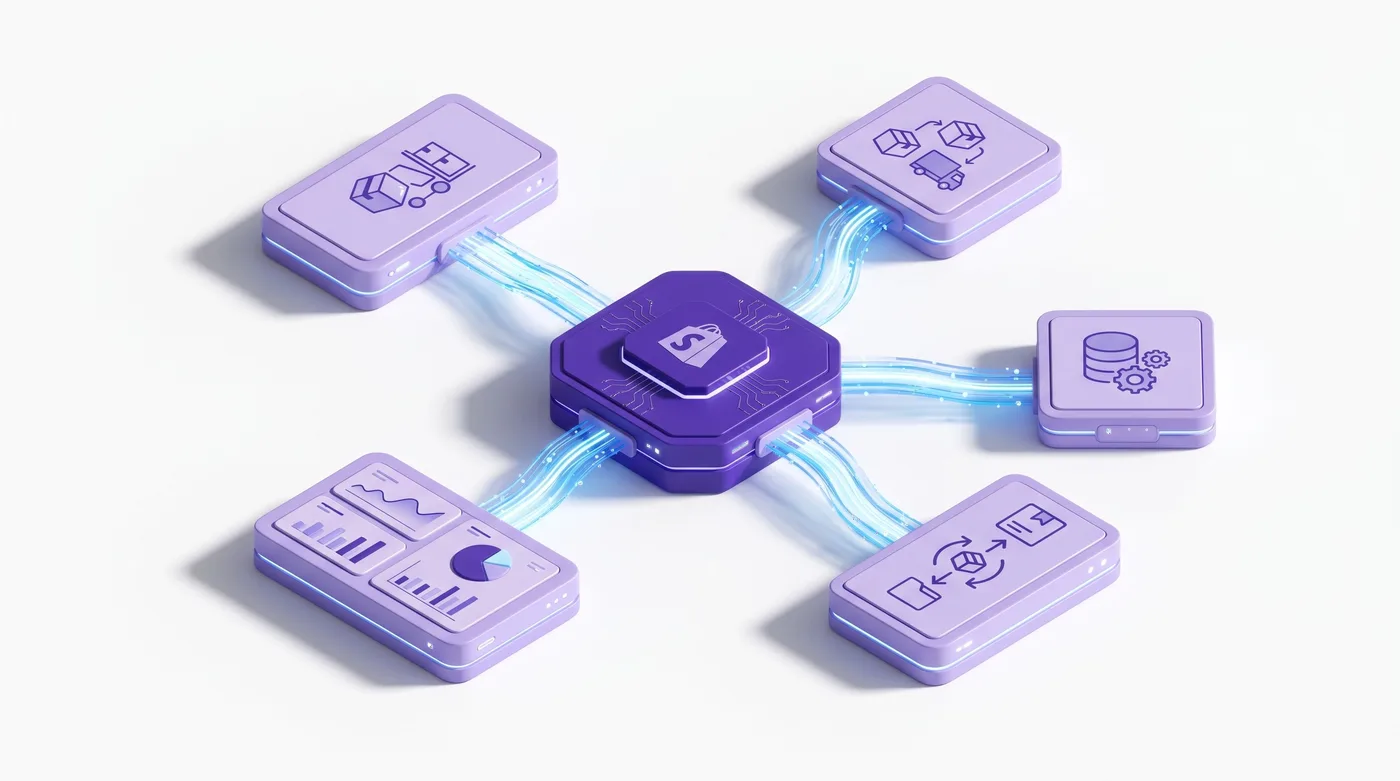
Plus scale の Shopify order management は5層のアーキテクチャだ。data plane(Shopify)、routing(multi-location + Flow)、fulfillment(3PL/WMS integrations)、customer-facing self-service、reporting/reconciliation。 これを1つのものとして扱うのが、1日1,000件を超えてから最初の6か月でチームがやる最も一般的なミスだ。
data plane は Shopify 自体だ。order、line item、payment status、fulfillment state の canonical record。ほかのすべてはこの layer を読み、または Admin API と webhooks 経由で書き戻す。
routing layer は、どの fulfillment location がどの order を担当するかを決める。native Shopify routing は rule-based(priority、proximity、stock)だが、order 単位だ。split shipment、backorder logic、SLA tier が必要なら、Flow で拡張するか dedicated OMS にロジックを送る。
fulfillment layer では、ほとんどの Plus store が third-party glue を追加する。Shopify Fulfillment Network、3PL(ShipBob、ShipMonk)、in-house WMS、dropshipping integrations だ。どれも fulfillment API で Shopify に戻すが、latency、error semantics、edit-handling の挙動が異なる。
customer-facing self-service layer を merchant は忘れがちだ。Customer Accounts は order status を見せるが、buyer が checkout 後に order を変更することはできない。このギャップに、最も効果の大きい tooling がある。
reporting layer は finance、BI、operations dashboard 向けにすべてを照合する。2026年4月の payout export 更新(Bank Reference、Payout ID columns)で、月次 close を回す finance team にはかなり扱いやすくなった。

Multi-Location Inventory Allocation と Order Routing
2026年3月10日の Pickup-in-Store 更新で、multi-location Plus store の routing 計算が変わった。1つの location に全在庫がない場合でも、auto-generated inventory transfers により複数の source location から order を fulfillment できるようになった。 この変更の前は、顧客が選んだ store だけでは埋められない複数商品入りの BOPIS order はキャンセルされるか、手動対応が必要だった。
assignedLocation ルールを Flow か Admin API integration で使っているなら、監査しろ。以前は手作業の回避策が必要だったケースを platform が処理するようになったので、18か月前の routing decisions の一部は今では最適ではない。
2026年の追加変更が routing at scale に影響する。
Flow inventory transfer triggers(April 30, 2026) — 新しい
Inventory transfer ready to shipとInventory transfer completedtriggers は、transfer state の変更で発火する。用途: 転送が出たら receiving location に通知する、transfer された order に自動でタグ付けして別の fulfillment queue に回す、transfer metafield を元の order に書き戻す。POS v11.3 の Pickup orders(March 30, 2026) — retail staff が、同じ multi-location transfer logic で future pickup 用の order を作成できる。made-to-order、customized goods、in-store special order に重要だ。
Payment requests per fulfillment(February 6, 2026) — upfront ではなく、fulfillment の完了ごとに payment を回収できる。pre-order、custom product、backordered SKU を含む B2B order に重要だ。buyer は各 fulfillment の出荷時に Customer Accounts から支払う。
Agency にとって、この3つの変更は、2024年版の routing setup を再監査すべきという意味だ。
fulfillment layer: custom glue code なしで 3PL をつなぐ
2026年の Plus store にとっての3PLの論点は、もはや「3PL を使うべきか」ではない。「どの integration tier か。そして order edit flexibility を失っていないか」だ。 ここで最も高くつくミスは、post-sync order edits をサポートしない 3PL の Shopify integration を選び、高額な B2B buyer が quantity change を求めてきた最初の瞬間にそれを知ることだ。
実務上の3つの integration tier:
Tier 1 — Shopify Fulfillment Network か Shopify-built integrations。 最も低摩擦で、edit support は完全、webhook propagation も最速。トレードオフは、特定の carrier と warehouse に限定されること。
Tier 2 — Shopify-certified app を持つ主要3PL(ShipBob、ShipMonk、Deliverr)。 edit support は良好で、webhook reliability もそこそこ。契約前に必ず確認: post-sync edit support、canceled-then-reopened order の扱い。
Tier 3 — private app 経由の custom 3PL または in-house WMS。 最大の control、最大の責任。初日から idempotent webhook handlers を実装しろ。Shopify は delivery を exponential backoff で retry するので、WMS は重複した
orders/updatedevents を二重 fulfillment を作らずに処理できなければならない。
Agency にとって、この tier の判断は downstream のすべてに影響する。Tier 3 の client には、Tier 1 の client とは違う OMS の考え方が必要だ。
大規模 Order Editing: native の限界、app layer、self-service
native Shopify order editing は、fulfillment 前の構造的な変更、つまり line item の追加・削除、quantity 調整、shipping address 更新は扱える。しかし、編集を運用上きれいに成立させる計算 layer までは届かない。 実質的には raw editing だ。admin では order を変更できるが、完全な OMS のように変更に合わせて platform が再計算してくれるわけではない。
実運用で merchant が実際に痛みを感じる gap:
discount logic は手動だ。 item 追加時に line-item discount を適用することはできるが、native editing は item が変わっても order-level code を再適用しないし、quantity 調整に応じた proportional discount も再計算しないし、既に適用済みの discount を変更もできない。order-level discount には、今でも draft order か partial refund が回避策だ。
buyer-facing の self-service edit flow がない。 Customer Accounts は order を表示するだけで、変更はできない。address-change の email はすべて manual support の手間になる。
edit window enforcement がない。 「buyer は placement から3時間以内に編集可能」といった native rule はない。Flow か app で作るしかない。
自動 re-validation がない。 native Shopify は edited order にタグを付けないし warehouse queue で止めもしないので、fulfillment team が手で再ピッキングすることになる。
500件/日以上の Plus store の計算: 5% が変更依頼を生み、1件あたり8分かかるなら、buyer-facing tool なら数秒で終わる変更のために、月200時間の手作業になる。
これは Revize の blog なので言うが、Revize は、rules-based windowing、address swap、variant change、quantity adjustment を備えた buyer-facing order editing を提供する。native order editing が省く recalculation logic も含む。Shopify での order editing の仕組みは、Shopify Edit Order Guide を見ろ。

2026年4月2日ロールアウト後の B2B Order Management
2026年4月2日の native B2B の Basic、Grow、Advanced への拡大で、B2B order management の会話は全員にとって変わった。非Plus client を onboarding する agency は、6か月前にはなかった order management の視点を持つ必要がある。 非Plus の B2B には、company profiles、payment terms、volume pricing、vaulted cards、ACH(US)、最大3つの catalog が含まれる。
運用上は:
同じアーキテクチャパターンはすべての paid plan に当てはまる。 Company → Location → Buyer の階層、payment terms と fulfillment status の分離、交渉済み価格の draft order。
Plus は依然として scale で差が出る。 無制限 catalog、catalog から company/location への直接割り当て、partial payment、deposit は引き続き Plus 専用だ。500人超の wholesale customer を account ごとの価格で運用するなら、この機能が効く。
B2B edit gap は残る。 Buyer は PO 後に line item を更新し、quantity を調整し、PO number を変える。だが native Shopify はどれも self-service としては表に出さない。
より深い B2B architecture は、Shopify B2B 2026 完全ガイド を見ろ。
Order Ops の背骨としての Shopify Flow
Shopify Flow は、Plus の order management stack で最も使われていない tool だ。2025年12月の test run 追加と2026年4月の inventory transfer triggers 追加で、order ops 向けの production-grade automation layer になった。 ほとんどの team は Flow を VIP tagging と abandoned cart email に使っている。order ops の可能性はそれよりはるかに大きい。
2026年の Plus 向け Flow パターン:
flag された address で fulfillment を自動停止。 Trigger:
Order created. Condition: address validation flag. Action:hold-for-reviewtag を付ける、auto-fulfillment を止める、ops team に Slack を送る。B2B order を別 queue に振り分ける。 Trigger:
Order created. Condition: B2B company assigned. Action:b2b-queueで tag、payment terms metafield を書き込む、専用 fulfillment location に割り当てる。inventory transfer alerts. Trigger(April 30, 2026):
Inventory transfer ready to ship. Action: 受領側 location の ops に到着予定 window を通知する。order edit の再検証。 Trigger:
Order updated. Condition: line item changed AND fulfillable. Action:edited-needs-repicktag を付ける、warehouse に通知する、timestamp metafield を書く。有効化前の test run(Dec 11, 2025)。 production の Flow 変更はすべて test run を通せ。branch と loop を正確にプレビューし、variable state を確認し、有効化前に問題を潰す。
test run と新しい triggers の組み合わせで、agency は今や code deploy と同じレベルの確認自信を持って Flow workflow を出せる。
OMS の build vs. buy 判断
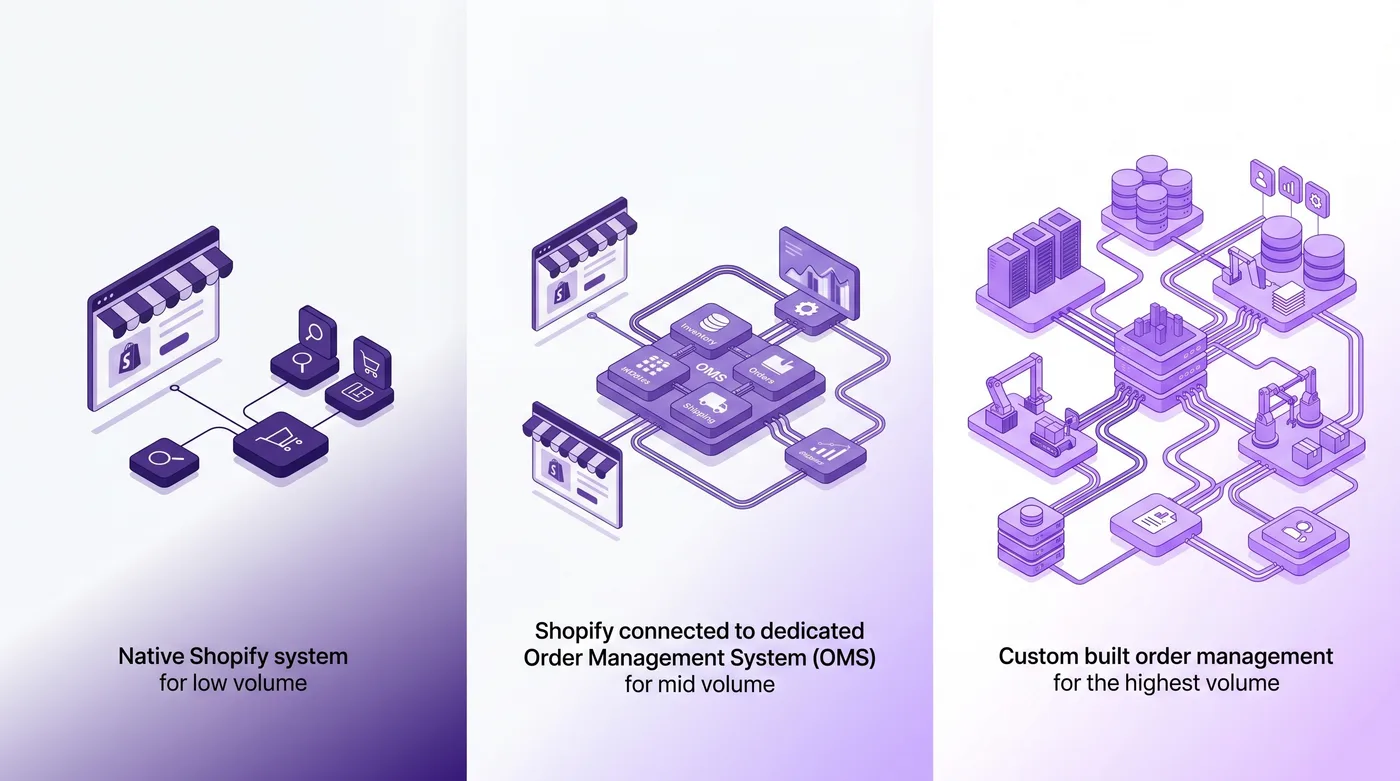
Plus merchant が app の寄せ集めをやめて dedicated OMS を採用する閾値は、single-channel DTC で月間5,000-10,000 orders あたりだ。multi-channel か multi-store ならもっと早い。 それ未満なら OMS はまず費用対効果が合わない。それを超えると、admin で order ops を回す運用負荷は急速に積み上がる。
選択肢 | 最適 | 強み | トレードオフ |
|---|---|---|---|
Native Shopify + apps | <5,000 orders/month、single channel | 初期コスト最小、最速、ecosystem が広い | multi-channel/multi-store と複雑な B2B routing に弱い |
Shopify + dedicated OMS (Brightpearl, Acumatica, NetSuite) | 5,000-50,000 orders/month、multi-channel | data を一元化、強い reporting、ERP integration | 実装に3-6か月、初期費用 $30k-$150k |
Shopify Admin API 経由の custom OMS | 50,000+ orders/month、独自 workflow | 最大の control、正確に合わせた logic | engineering ownership、継続保守 |
ほとんどの Plus store は中間の path に落ち着く。Shopify を source of truth にし、Flow を routine automation に使い、OMS で cross-channel visibility を持ち、Revize 型 app で buyer-facing self-service を提供する。1つの tool ですべては覆えない。問題は、どこに境界を引くかだ。
Agency にとって、OMS の話は4か月目ではなく、最初の打ち合わせでやるべきだ。月8,000 orders の client はまだ判断中だ。月80,000 orders の client は、もう決めている。本人が認めていないだけだ。

Order Event 向け API と Webhook アーキテクチャ
order management integration を作る dev team にとって重要なのは GraphQL Admin API と order webhooks の2つだけだ。Webhook アーキテクチャを早期に正しく組めば、1年分の firefighting を避けられる。 2025年11月に tax webhook resource IDs が API version 2026-01 で Global ID に移行したのは、分かりやすい予兆だ。Shopify はあらゆる場所で GID に寄せている。新しい integration は初日からそれを使うべきだ。
大規模でも崩れない3つの pattern:
idempotent webhook handlers。 Shopify は delivery を exponential backoff で retry する。処理済み webhook ID を追跡し、処理前に確認しろ。handler は、同じ event が複数回届いても downstream の重複 record を作ってはいけない。
payload だけでなく webhook + GraphQL。 webhook は通知トリガーとして使い、state が重要なものは GraphQL で canonical state を再取得する。関連 event が同時に来たときの race condition を避けられる。
backfill と reporting には bulk operations。 paginated query ではなく bulk operations GraphQL を使え。桁違いに速く、高ボリュームで rate limit を避けられる。
結論
2026年の Shopify order management は、tooling の問題ではなく layered architecture の問題だ。 routing、fulfillment、self-service、OMS scope を意図して決める Plus operator は、きれいにスケールする。architecture の視点なしに app を積み上げる team は、最終的に壁にぶつかる。たいていは月間5,000-10,000 orders あたりだ。
Plus operator 向け: March/April 2026 の multi-location と inventory transfer の変更に対して routing rule を監査しろ。production 変更の前には Flow workflow を test run しろ。volume が迫る前に build-vs-buy を決めろ。
Agency 向け: discovery の最初に OMS architecture の会話を入れろ。client の state を5層でマッピングしろ。2026年4月2日の B2B 全プラン展開で、非Plus client も6か月前にはなかった order management の視点が必要になった。
全員向け: native Shopify は今も buyer-facing の order editing を提供しない。このギャップは、ほとんどの order management stack で最大の欠落だ。これを埋めれば、普通は最初の1か月で support hours の回収が見える。
今週やること:
新しい multi-location transfer behavior(March 10, 2026)に対して fulfillment routing を監査する
新しい Flow inventory transfer triggers を operations alerting workflow に追加する
6か月以上触っていない production Flow workflow を test run する
buyer-facing self-service order editing がないなら、今週入れろ — support-hours の計算は明白だ
月5,000 orders に近づいていて OMS plan がないなら、今すぐ discovery を始めろ

よくある質問
専用 OMS を検討すべき order volume の閾値は?
single-channel の DTC Plus merchant なら、月間5,000-10,000 orders で専用 OMS が回収し始める。 multi-channel と multi-store はもっと早い。場合によっては、複雑さが volume を上回ると、1 store あたり月2,000 orders でもそうだ。それ未満なら、native Shopify と apps で低コストに回る。
2026年3月の multi-location pickup 更新で routing はどう変わった?
Pickup-in-store order は、1つの location に全在庫がない場合、自動で複数の source location から inventory transfer 経由で fulfillment される。 3月10日以前は、選択した store から埋められない複数商品入りの BOPIS order は失敗するか、手動介入が必要だった。これ以前に書かれた routing rule と assignedLocation logic は再監査すべきだ。
2026年の Shopify で buyer は自分の order を編集できる?
native Shopify は今も、buyer-facing の checkout 後 order editing を提供していない。 Customer Accounts は status と tracking を表示するが、buyer は native UI で line item、address、quantity を変更できない。self-service editing には third-party tool が必要だ。
2026年の order management 向け Shopify Flow の新機能は?
2つの更新: inventory transfer triggers(2026年4月30日)と test runs(2025年12月11日)。 triggers は Inventory transfer ready to ship と completed。test run は有効化前に workflow の挙動をプレビューする。合わせると、Flow は production automation layer になる。
order event 向け webhook handler は、どのように設計すべき?
初日から idempotent に作れ。Shopify は delivery を exponential backoff で retry するので、endpoint が一度落ちると同じ orders/updated event が何度も届く。 処理済み webhook ID を追跡しろ。webhook は通知トリガーとして使い、canonical state は GraphQL で再取得する。backfill には bulk operations API を使え。
2026年4月の rollout で B2B order management は変わった?
変わった。2026年4月2日以降、native B2B はすべての paid plan にある。 Company → Location → Buyer の階層はどこでも同じだ。Plus は引き続き無制限 catalog、direct catalog assignment、partial payment、deposit を持つ。
避けるべき3PL integration のミスは?
最も高くつくミスは、post-sync order edits をサポートしない3PLだ。 契約前に確認しろ: post-sync edits、canceled-reopened の扱い、webhook latency。custom integration なら idempotent handler は絶対条件だ。
Sidekick で order data を query できる?
できる。2026年1月6日以降、Sidekick は payments と fulfillment data に対して自然言語から ShopifyQL query を生成する。 例: "Show me fulfillment times by carrier." ad-hoc の質問には有用だが、production report には canonical query を書け。
Payment requests per fulfillment はどう機能する?
2026年2月6日以降、fulfillment の完了ごとに payment を回収できる。mixed lead time、pre-order、backordered SKU を含む B2B に便利だ。 buyer は各 fulfillment の出荷時に Customer Accounts から支払う。pre-order が多い store の cash flow model を変える。
Shopify OMS の build vs buy は実務上どういう意味?
3つの path がある。Shopify + apps(low volume)、Shopify + dedicated OMS(mid-high volume、multi-channel)、custom OMS via Admin API(highest volume)。 ほとんどの Plus store は中間の path にいる。Shopify を source of truth にし、Flow を automation に使い、OMS を cross-channel visibility に使う。
この一式で order analytics をどうきれいに保つ?
batch ETL には bulk operations GraphQL を使い、Shopify を source of truth として扱い、finance close では payout export と照合しろ。 2026年4月の payout export 更新(Bank Reference、Payout ID)で monthly close はよりきれいになった。Daily Analytics insights はトレンドを自動で出す。production reporting には canonical query を作れ。
今年やるべき Shopify order management の変更で、最も効果が高いのは?
buyer-facing self-service order editing の追加だ。 これを入れた store では、order change の ticket が5%超から1-2%まで落ちる。月10,000 orders なら、月67時間の support time を削減できる。
関連記事
Shopify B2B 2026 完全ガイド — 2026年4月ロールアウト後の B2B 運用アーキテクチャ
Shopify Checkout Extensibility 2026 — Shopify order management が動く checkout layer
Shopifyで注文を編集する方法 — DTC と B2B の order editing 基本
高度な Shopify Flow ワークフロー — 上記アーキテクチャ向けの automation pattern
Universal Commerce Protocol (UCP) — より広い platform 方向性
Shopify order management 2026 — Plus運用者が15秒で押さえるべきこと
AdminはOMSではない。 1日1,000件超では、native Shopifyは system of record であって、system of action ではない。
Multi-locationは3月に賢くなった。 店舗受取は now fulfills from multiple locations via auto-transfers; Flow has new inventory transfer triggers (Apr 30, 2026).
B2B order managementは2026年4月2日に変わった。 Native B2B is on Basic, Grow, and Advanced — agency と multi-store のワークフローは、非Plus店舗も前提にする必要がある。
build-vs-buy の判断は現実だ。 ほとんどの merchant は月間5,000-10,000 orders で dedicated OMS を導入する — multi-channel か multi-store ならもっと早い。
self-service order editing は最大の欠落だ。 これを追加した store では、注文変更の ticket volume が一桁台まで落ちる。
Plus scale の Shopify order management はツールの問題ではない。アーキテクチャの問題だ。 1日100件なら admin で運用できる。1日1,000件になるとボトルネックになり、app を足し始める。1日10,000件では、きれいにスケールする store と止まる store の差は、買った app ではない。Shopify と残りの stack の境界をどこに引くかだ。
この guide は、その判断を担う人向けだ。高ボリュームの DTC と B2B を運用する Plus operator、client の onboarding を担う agency tech lead、そして Shopify Flow を拡張するのか、dedicated OMS を連携するのか、custom tooling を作るのかを決める architect 向け。

実際にスケールする注文管理アーキテクチャ
Plus scale の Shopify order management は5層のアーキテクチャだ。data plane(Shopify)、routing(multi-location + Flow)、fulfillment(3PL/WMS integrations)、customer-facing self-service、reporting/reconciliation。 これを1つのものとして扱うのが、1日1,000件を超えてから最初の6か月でチームがやる最も一般的なミスだ。
data plane は Shopify 自体だ。order、line item、payment status、fulfillment state の canonical record。ほかのすべてはこの layer を読み、または Admin API と webhooks 経由で書き戻す。
routing layer は、どの fulfillment location がどの order を担当するかを決める。native Shopify routing は rule-based(priority、proximity、stock)だが、order 単位だ。split shipment、backorder logic、SLA tier が必要なら、Flow で拡張するか dedicated OMS にロジックを送る。
fulfillment layer では、ほとんどの Plus store が third-party glue を追加する。Shopify Fulfillment Network、3PL(ShipBob、ShipMonk)、in-house WMS、dropshipping integrations だ。どれも fulfillment API で Shopify に戻すが、latency、error semantics、edit-handling の挙動が異なる。
customer-facing self-service layer を merchant は忘れがちだ。Customer Accounts は order status を見せるが、buyer が checkout 後に order を変更することはできない。このギャップに、最も効果の大きい tooling がある。
reporting layer は finance、BI、operations dashboard 向けにすべてを照合する。2026年4月の payout export 更新(Bank Reference、Payout ID columns)で、月次 close を回す finance team にはかなり扱いやすくなった。

Multi-Location Inventory Allocation と Order Routing
2026年3月10日の Pickup-in-Store 更新で、multi-location Plus store の routing 計算が変わった。1つの location に全在庫がない場合でも、auto-generated inventory transfers により複数の source location から order を fulfillment できるようになった。 この変更の前は、顧客が選んだ store だけでは埋められない複数商品入りの BOPIS order はキャンセルされるか、手動対応が必要だった。
assignedLocation ルールを Flow か Admin API integration で使っているなら、監査しろ。以前は手作業の回避策が必要だったケースを platform が処理するようになったので、18か月前の routing decisions の一部は今では最適ではない。
2026年の追加変更が routing at scale に影響する。
Flow inventory transfer triggers(April 30, 2026) — 新しい
Inventory transfer ready to shipとInventory transfer completedtriggers は、transfer state の変更で発火する。用途: 転送が出たら receiving location に通知する、transfer された order に自動でタグ付けして別の fulfillment queue に回す、transfer metafield を元の order に書き戻す。POS v11.3 の Pickup orders(March 30, 2026) — retail staff が、同じ multi-location transfer logic で future pickup 用の order を作成できる。made-to-order、customized goods、in-store special order に重要だ。
Payment requests per fulfillment(February 6, 2026) — upfront ではなく、fulfillment の完了ごとに payment を回収できる。pre-order、custom product、backordered SKU を含む B2B order に重要だ。buyer は各 fulfillment の出荷時に Customer Accounts から支払う。
Agency にとって、この3つの変更は、2024年版の routing setup を再監査すべきという意味だ。
fulfillment layer: custom glue code なしで 3PL をつなぐ
2026年の Plus store にとっての3PLの論点は、もはや「3PL を使うべきか」ではない。「どの integration tier か。そして order edit flexibility を失っていないか」だ。 ここで最も高くつくミスは、post-sync order edits をサポートしない 3PL の Shopify integration を選び、高額な B2B buyer が quantity change を求めてきた最初の瞬間にそれを知ることだ。
実務上の3つの integration tier:
Tier 1 — Shopify Fulfillment Network か Shopify-built integrations。 最も低摩擦で、edit support は完全、webhook propagation も最速。トレードオフは、特定の carrier と warehouse に限定されること。
Tier 2 — Shopify-certified app を持つ主要3PL(ShipBob、ShipMonk、Deliverr)。 edit support は良好で、webhook reliability もそこそこ。契約前に必ず確認: post-sync edit support、canceled-then-reopened order の扱い。
Tier 3 — private app 経由の custom 3PL または in-house WMS。 最大の control、最大の責任。初日から idempotent webhook handlers を実装しろ。Shopify は delivery を exponential backoff で retry するので、WMS は重複した
orders/updatedevents を二重 fulfillment を作らずに処理できなければならない。
Agency にとって、この tier の判断は downstream のすべてに影響する。Tier 3 の client には、Tier 1 の client とは違う OMS の考え方が必要だ。
大規模 Order Editing: native の限界、app layer、self-service
native Shopify order editing は、fulfillment 前の構造的な変更、つまり line item の追加・削除、quantity 調整、shipping address 更新は扱える。しかし、編集を運用上きれいに成立させる計算 layer までは届かない。 実質的には raw editing だ。admin では order を変更できるが、完全な OMS のように変更に合わせて platform が再計算してくれるわけではない。
実運用で merchant が実際に痛みを感じる gap:
discount logic は手動だ。 item 追加時に line-item discount を適用することはできるが、native editing は item が変わっても order-level code を再適用しないし、quantity 調整に応じた proportional discount も再計算しないし、既に適用済みの discount を変更もできない。order-level discount には、今でも draft order か partial refund が回避策だ。
buyer-facing の self-service edit flow がない。 Customer Accounts は order を表示するだけで、変更はできない。address-change の email はすべて manual support の手間になる。
edit window enforcement がない。 「buyer は placement から3時間以内に編集可能」といった native rule はない。Flow か app で作るしかない。
自動 re-validation がない。 native Shopify は edited order にタグを付けないし warehouse queue で止めもしないので、fulfillment team が手で再ピッキングすることになる。
500件/日以上の Plus store の計算: 5% が変更依頼を生み、1件あたり8分かかるなら、buyer-facing tool なら数秒で終わる変更のために、月200時間の手作業になる。
これは Revize の blog なので言うが、Revize は、rules-based windowing、address swap、variant change、quantity adjustment を備えた buyer-facing order editing を提供する。native order editing が省く recalculation logic も含む。Shopify での order editing の仕組みは、Shopify Edit Order Guide を見ろ。

2026年4月2日ロールアウト後の B2B Order Management
2026年4月2日の native B2B の Basic、Grow、Advanced への拡大で、B2B order management の会話は全員にとって変わった。非Plus client を onboarding する agency は、6か月前にはなかった order management の視点を持つ必要がある。 非Plus の B2B には、company profiles、payment terms、volume pricing、vaulted cards、ACH(US)、最大3つの catalog が含まれる。
運用上は:
同じアーキテクチャパターンはすべての paid plan に当てはまる。 Company → Location → Buyer の階層、payment terms と fulfillment status の分離、交渉済み価格の draft order。
Plus は依然として scale で差が出る。 無制限 catalog、catalog から company/location への直接割り当て、partial payment、deposit は引き続き Plus 専用だ。500人超の wholesale customer を account ごとの価格で運用するなら、この機能が効く。
B2B edit gap は残る。 Buyer は PO 後に line item を更新し、quantity を調整し、PO number を変える。だが native Shopify はどれも self-service としては表に出さない。
より深い B2B architecture は、Shopify B2B 2026 完全ガイド を見ろ。
Order Ops の背骨としての Shopify Flow
Shopify Flow は、Plus の order management stack で最も使われていない tool だ。2025年12月の test run 追加と2026年4月の inventory transfer triggers 追加で、order ops 向けの production-grade automation layer になった。 ほとんどの team は Flow を VIP tagging と abandoned cart email に使っている。order ops の可能性はそれよりはるかに大きい。
2026年の Plus 向け Flow パターン:
flag された address で fulfillment を自動停止。 Trigger:
Order created. Condition: address validation flag. Action:hold-for-reviewtag を付ける、auto-fulfillment を止める、ops team に Slack を送る。B2B order を別 queue に振り分ける。 Trigger:
Order created. Condition: B2B company assigned. Action:b2b-queueで tag、payment terms metafield を書き込む、専用 fulfillment location に割り当てる。inventory transfer alerts. Trigger(April 30, 2026):
Inventory transfer ready to ship. Action: 受領側 location の ops に到着予定 window を通知する。order edit の再検証。 Trigger:
Order updated. Condition: line item changed AND fulfillable. Action:edited-needs-repicktag を付ける、warehouse に通知する、timestamp metafield を書く。有効化前の test run(Dec 11, 2025)。 production の Flow 変更はすべて test run を通せ。branch と loop を正確にプレビューし、variable state を確認し、有効化前に問題を潰す。
test run と新しい triggers の組み合わせで、agency は今や code deploy と同じレベルの確認自信を持って Flow workflow を出せる。
OMS の build vs. buy 判断
Plus merchant が app の寄せ集めをやめて dedicated OMS を採用する閾値は、single-channel DTC で月間5,000-10,000 orders あたりだ。multi-channel か multi-store ならもっと早い。 それ未満なら OMS はまず費用対効果が合わない。それを超えると、admin で order ops を回す運用負荷は急速に積み上がる。
選択肢 | 最適 | 強み | トレードオフ |
|---|---|---|---|
Native Shopify + apps | <5,000 orders/month、single channel | 初期コスト最小、最速、ecosystem が広い | multi-channel/multi-store と複雑な B2B routing に弱い |
Shopify + dedicated OMS (Brightpearl, Acumatica, NetSuite) | 5,000-50,000 orders/month、multi-channel | data を一元化、強い reporting、ERP integration | 実装に3-6か月、初期費用 $30k-$150k |
Shopify Admin API 経由の custom OMS | 50,000+ orders/month、独自 workflow | 最大の control、正確に合わせた logic | engineering ownership、継続保守 |
ほとんどの Plus store は中間の path に落ち着く。Shopify を source of truth にし、Flow を routine automation に使い、OMS で cross-channel visibility を持ち、Revize 型 app で buyer-facing self-service を提供する。1つの tool ですべては覆えない。問題は、どこに境界を引くかだ。
Agency にとって、OMS の話は4か月目ではなく、最初の打ち合わせでやるべきだ。月8,000 orders の client はまだ判断中だ。月80,000 orders の client は、もう決めている。本人が認めていないだけだ。

Order Event 向け API と Webhook アーキテクチャ
order management integration を作る dev team にとって重要なのは GraphQL Admin API と order webhooks の2つだけだ。Webhook アーキテクチャを早期に正しく組めば、1年分の firefighting を避けられる。 2025年11月に tax webhook resource IDs が API version 2026-01 で Global ID に移行したのは、分かりやすい予兆だ。Shopify はあらゆる場所で GID に寄せている。新しい integration は初日からそれを使うべきだ。
大規模でも崩れない3つの pattern:
idempotent webhook handlers。 Shopify は delivery を exponential backoff で retry する。処理済み webhook ID を追跡し、処理前に確認しろ。handler は、同じ event が複数回届いても downstream の重複 record を作ってはいけない。
payload だけでなく webhook + GraphQL。 webhook は通知トリガーとして使い、state が重要なものは GraphQL で canonical state を再取得する。関連 event が同時に来たときの race condition を避けられる。
backfill と reporting には bulk operations。 paginated query ではなく bulk operations GraphQL を使え。桁違いに速く、高ボリュームで rate limit を避けられる。
結論
2026年の Shopify order management は、tooling の問題ではなく layered architecture の問題だ。 routing、fulfillment、self-service、OMS scope を意図して決める Plus operator は、きれいにスケールする。architecture の視点なしに app を積み上げる team は、最終的に壁にぶつかる。たいていは月間5,000-10,000 orders あたりだ。
Plus operator 向け: March/April 2026 の multi-location と inventory transfer の変更に対して routing rule を監査しろ。production 変更の前には Flow workflow を test run しろ。volume が迫る前に build-vs-buy を決めろ。
Agency 向け: discovery の最初に OMS architecture の会話を入れろ。client の state を5層でマッピングしろ。2026年4月2日の B2B 全プラン展開で、非Plus client も6か月前にはなかった order management の視点が必要になった。
全員向け: native Shopify は今も buyer-facing の order editing を提供しない。このギャップは、ほとんどの order management stack で最大の欠落だ。これを埋めれば、普通は最初の1か月で support hours の回収が見える。
今週やること:
新しい multi-location transfer behavior(March 10, 2026)に対して fulfillment routing を監査する
新しい Flow inventory transfer triggers を operations alerting workflow に追加する
6か月以上触っていない production Flow workflow を test run する
buyer-facing self-service order editing がないなら、今週入れろ — support-hours の計算は明白だ
月5,000 orders に近づいていて OMS plan がないなら、今すぐ discovery を始めろ

よくある質問
専用 OMS を検討すべき order volume の閾値は?
single-channel の DTC Plus merchant なら、月間5,000-10,000 orders で専用 OMS が回収し始める。 multi-channel と multi-store はもっと早い。場合によっては、複雑さが volume を上回ると、1 store あたり月2,000 orders でもそうだ。それ未満なら、native Shopify と apps で低コストに回る。
2026年3月の multi-location pickup 更新で routing はどう変わった?
Pickup-in-store order は、1つの location に全在庫がない場合、自動で複数の source location から inventory transfer 経由で fulfillment される。 3月10日以前は、選択した store から埋められない複数商品入りの BOPIS order は失敗するか、手動介入が必要だった。これ以前に書かれた routing rule と assignedLocation logic は再監査すべきだ。
2026年の Shopify で buyer は自分の order を編集できる?
native Shopify は今も、buyer-facing の checkout 後 order editing を提供していない。 Customer Accounts は status と tracking を表示するが、buyer は native UI で line item、address、quantity を変更できない。self-service editing には third-party tool が必要だ。
2026年の order management 向け Shopify Flow の新機能は?
2つの更新: inventory transfer triggers(2026年4月30日)と test runs(2025年12月11日)。 triggers は Inventory transfer ready to ship と completed。test run は有効化前に workflow の挙動をプレビューする。合わせると、Flow は production automation layer になる。
order event 向け webhook handler は、どのように設計すべき?
初日から idempotent に作れ。Shopify は delivery を exponential backoff で retry するので、endpoint が一度落ちると同じ orders/updated event が何度も届く。 処理済み webhook ID を追跡しろ。webhook は通知トリガーとして使い、canonical state は GraphQL で再取得する。backfill には bulk operations API を使え。
2026年4月の rollout で B2B order management は変わった?
変わった。2026年4月2日以降、native B2B はすべての paid plan にある。 Company → Location → Buyer の階層はどこでも同じだ。Plus は引き続き無制限 catalog、direct catalog assignment、partial payment、deposit を持つ。
避けるべき3PL integration のミスは?
最も高くつくミスは、post-sync order edits をサポートしない3PLだ。 契約前に確認しろ: post-sync edits、canceled-reopened の扱い、webhook latency。custom integration なら idempotent handler は絶対条件だ。
Sidekick で order data を query できる?
できる。2026年1月6日以降、Sidekick は payments と fulfillment data に対して自然言語から ShopifyQL query を生成する。 例: "Show me fulfillment times by carrier." ad-hoc の質問には有用だが、production report には canonical query を書け。
Payment requests per fulfillment はどう機能する?
2026年2月6日以降、fulfillment の完了ごとに payment を回収できる。mixed lead time、pre-order、backordered SKU を含む B2B に便利だ。 buyer は各 fulfillment の出荷時に Customer Accounts から支払う。pre-order が多い store の cash flow model を変える。
Shopify OMS の build vs buy は実務上どういう意味?
3つの path がある。Shopify + apps(low volume)、Shopify + dedicated OMS(mid-high volume、multi-channel)、custom OMS via Admin API(highest volume)。 ほとんどの Plus store は中間の path にいる。Shopify を source of truth にし、Flow を automation に使い、OMS を cross-channel visibility に使う。
この一式で order analytics をどうきれいに保つ?
batch ETL には bulk operations GraphQL を使い、Shopify を source of truth として扱い、finance close では payout export と照合しろ。 2026年4月の payout export 更新(Bank Reference、Payout ID)で monthly close はよりきれいになった。Daily Analytics insights はトレンドを自動で出す。production reporting には canonical query を作れ。
今年やるべき Shopify order management の変更で、最も効果が高いのは?
buyer-facing self-service order editing の追加だ。 これを入れた store では、order change の ticket が5%超から1-2%まで落ちる。月10,000 orders なら、月67時間の support time を削減できる。
関連記事
Shopify B2B 2026 完全ガイド — 2026年4月ロールアウト後の B2B 運用アーキテクチャ
Shopify Checkout Extensibility 2026 — Shopify order management が動く checkout layer
Shopifyで注文を編集する方法 — DTC と B2B の order editing 基本
高度な Shopify Flow ワークフロー — 上記アーキテクチャ向けの automation pattern
Universal Commerce Protocol (UCP) — より広い platform 方向性
RevizeでShopifyストアを刷新しましょう。顧客体験を軸にリードする。
© 著作権 2024、無断転載を禁じます
RevizeでShopifyストアを刷新しましょう。顧客体験を軸にリードする。
© 著作権 2024、無断転載を禁じます
RevizeでShopifyストアを刷新しましょう。顧客体験を軸にリードする。
© 著作権 2024、無断転載を禁じます
RevizeでShopifyストアを刷新しましょう。顧客体験を軸にリードする。
© 著作権 2024、無断転載を禁じます