
On this page
A seasonal picker needs to know which tote to take, which item belongs in it, and when to stop. Build onboarding around those decisions before you ask for speed.
In 2026, Black Friday falls on November 27 and Cyber Monday on November 30, according to the 2026 calendar. Use the final two to three weeks to rehearse your actual floor. The plan below covers people, stations, and the point where an order change becomes a physical instruction.
How should you use the final three weeks before BFCM?
Prepare stations first, teach one role at a time, and finish with a supervised rehearsal before the sale.
Use this suggested schedule, moving it earlier if your promotion starts before Black Friday:
- November 6 to 12: Name station leads and backups. Check stock locations, packing materials, device access, and the place where exceptions wait. Prepare practice orders using your sale products.
- November 13 to 19: Demonstrate each role, then watch new hires repeat it. Include similar variants, multiple quantities, and a kit if you sell one. Record which stations each person can operate independently.
- November 20 to 26: Run a mixed rehearsal with support and dispatch involved. Introduce a stock mismatch, a changed order, and a cancellation. Fix unclear instructions and repeat the failed steps.
Shopify’s BFCM checklist, updated October 23, 2026, recommends organizing the fulfillment area, preparing supplies, and communicating with fulfillment staff. Turn those recommendations into a station lead’s sign-off.
If you have two weeks, combine preparation and demonstration. Keep time for observed practice before independent work.
Who owns each part of seasonal warehouse onboarding?
Give every station a named trainer and every exception a named decision-maker.
Assign these responsibilities before seasonal staff arrive:
- The shift lead owns the briefing, station assignments, break coverage, and decisions about moving people between tasks.
- The picking trainer demonstrates order identity, bin location, SKU, variant, and quantity checks. This person handles missing-stock questions.
- The packing and dispatch leads approve packaging, label checks, staging lanes, and the final handoff. One person may cover both roles on a smaller floor.
- The support-to-floor coordinator receives change and cancellation requests, finds the physical order, and gets a clear stop or restart confirmation.
Write the names and contact method at each station. Name a backup for breaks and shift changes. Tell new hires what to do if neither person answers: park the affected order in the designated exception area and continue only with unrelated, released work.
Shopify’s busy-season readiness guide advises checking seasonal staff access and permissions before their busiest shift. Apply that preparation to your warehouse devices and systems. Have each person prove their access before the briefing ends.
What should be ready at each station?
Set up each station so a new hire can find the current instruction, complete the task, and separate an exception.
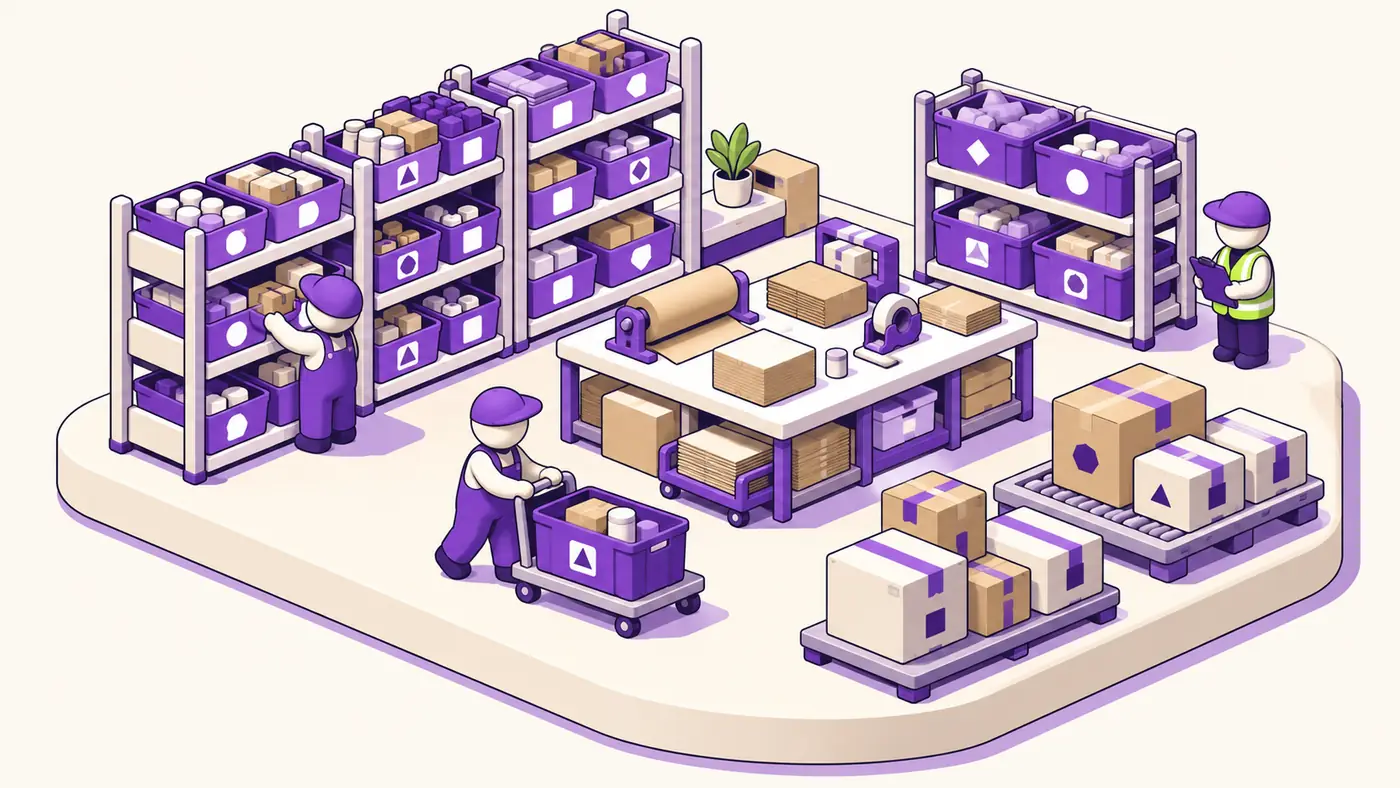
Walk the route from incoming orders to outbound staging. At picking, check that bin labels distinguish the variants people could confuse. At packing, place approved cartons, inserts, protective materials, tape, and a working scanner within reach.
Keep one order’s goods together in an identified tote. Give held or disputed work a separate place, away from ready-to-ship parcels. Make the distinction visible in your written station instructions too.
For an illustrative apparel store, prepare a medium shirt and a large shirt from the same collection. Ask the trainee to identify the correct SKU from the order instruction. Then repeat with a quantity of two. Product appearance alone is not the check you are teaching.
Test the printer with the label stock you will use. Check scanner batteries and spare supplies. Have the supervisor cover the site’s safety induction, emergency routes, and equipment restrictions before floor practice. New hires need to know which tasks require separate authorization.
What should you say on a seasonal worker’s first day?
Explain the route, demonstrate one correct order, and ask the new hire to repeat the checks aloud.
Use this first-day onboarding script as a template. Replace the station names and escalation contacts with your own:
- Start at the order queue. Say: Take work only from this released queue. Match the order identifier to the tote before you pick. If the instruction is missing or unclear, ask the picking lead.
- Demonstrate a pick. Say: Find the bin, match the SKU and variant, then confirm the quantity. Watch me check the item against the order. Now show me the same checks on the next item.
- Demonstrate packing. Say: Recheck the contents before sealing. Use this packaging recipe for this product. Match the parcel to the destination and service instruction before moving it to staging.
- Show the stop procedure. Say: If a cancellation, change, damaged item, or mismatch appears, stop this order. Keep its goods together in the exception area and contact this coordinator. Wait for a clear restart instruction.
- Ask for a demonstration back. Have the trainee complete a practice order while explaining the checks. Then present an exception and ask them to show where it goes and whom they contact.
Write down what the trainee demonstrated and what needs another attempt. Sign off picking and packing separately. Someone who can pick accurately may still need help choosing protective packaging or checking a shipping service.
Where does a ten-minute Warehouse Rush session fit?
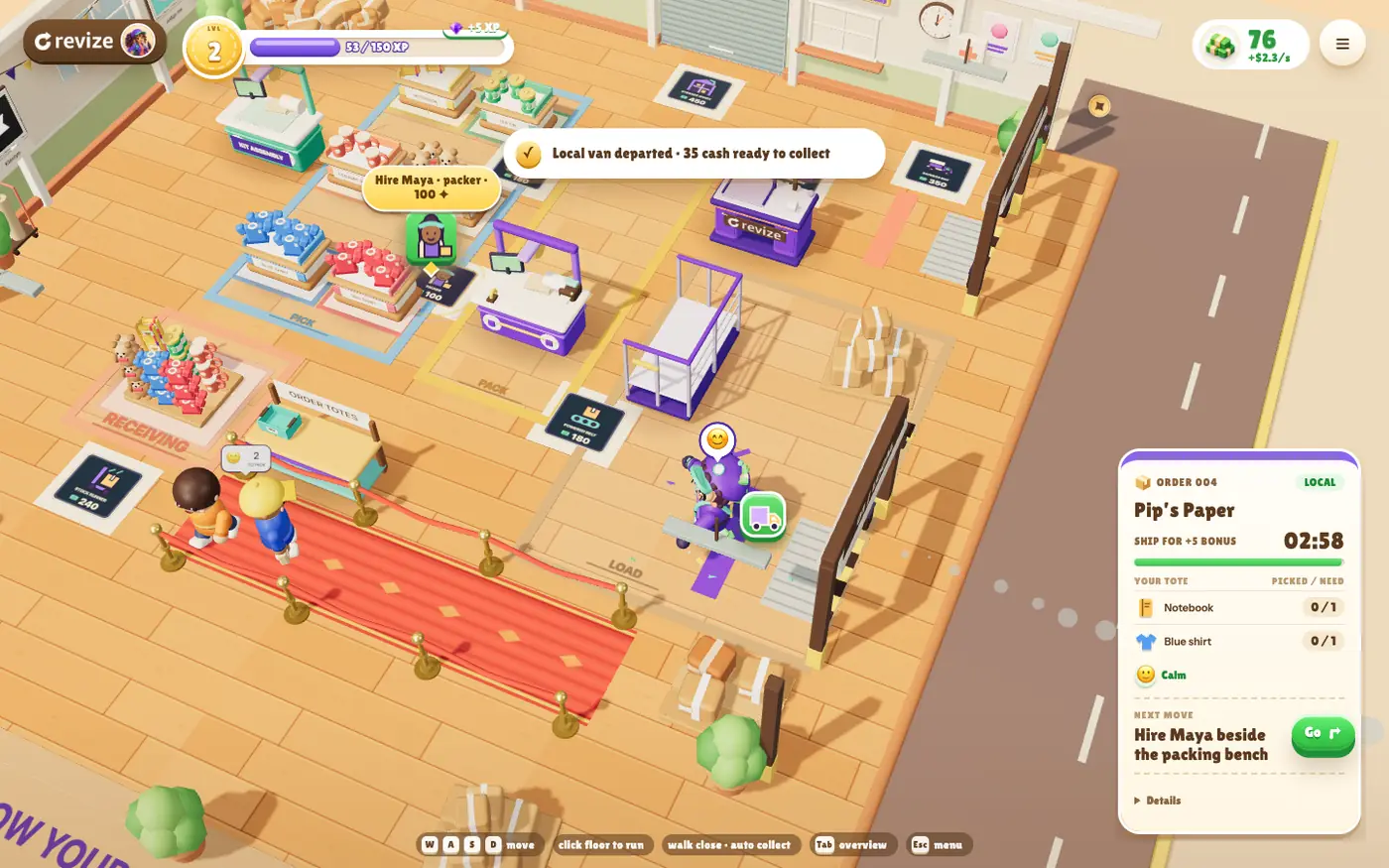
Use Warehouse Rush as an optional illustration of the flow before practicing on your real stations.
Warehouse Rush is free, runs in the browser, and is English only. Set aside ten minutes as a low-stakes warm-up. With a shared screen, ask the group to follow a tote through the game:
- Take an order tote and collect the goods from the matching shelves.
- Locate Kit assembly. Some orders need their collected goods assembled before packing.
- Visit a packing bench, then carry the carton to its dispatch van to load it.
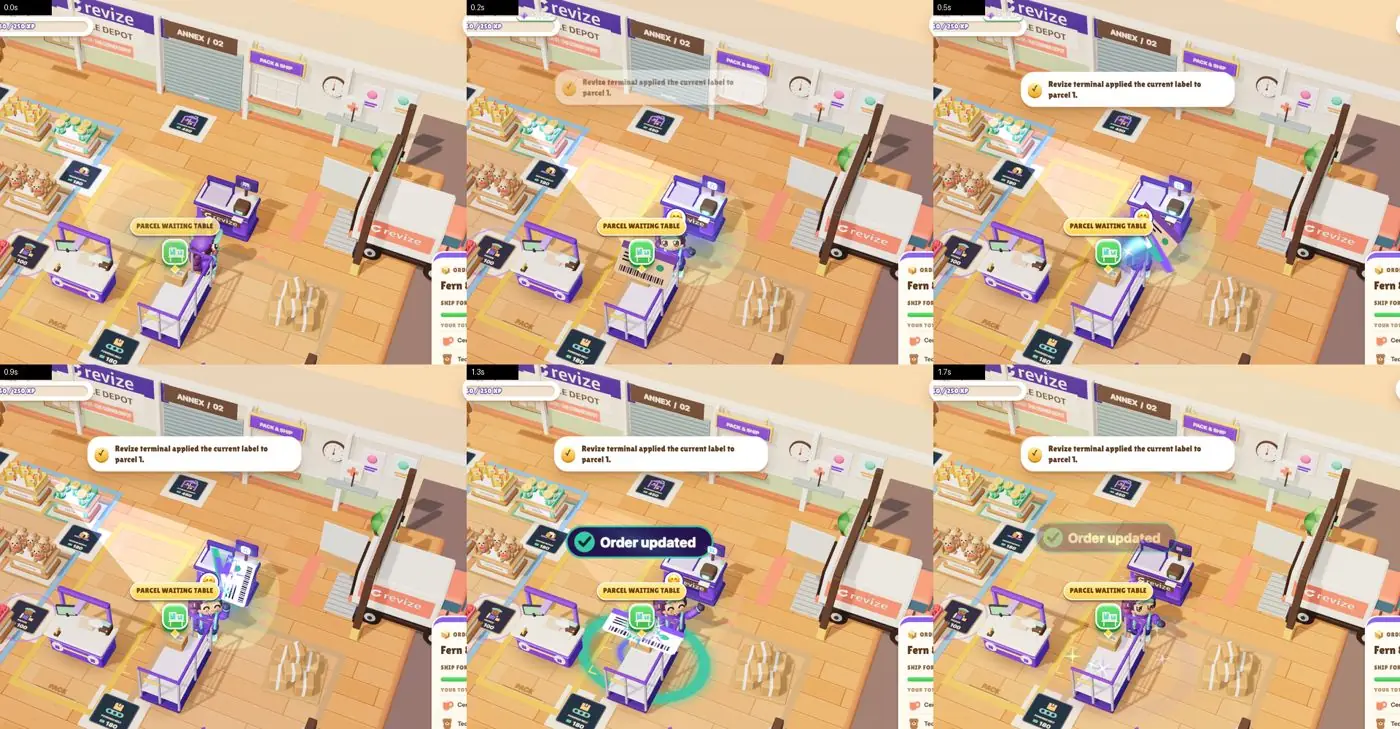
- Locate the Revize correction bench, where changed orders go for correction.
Use the sequence as a conversation starter: pick, kit when required, pack, and load. Ask staff to point out the equivalent stations on your own floor. If the short session does not produce a kit or changed order, show those stations and the correction screenshot instead.
The game illustrates those steps. Assess readiness with supervised work on your own products, equipment, and instructions. A game score is not a warehouse qualification.
How do you check pick and pack accuracy?
Observe the checks on representative practice orders before you measure pace.
Build the practice set around your sale assortment. Include similar variants, repeated quantities, a fragile item, and any gift or kit instructions that apply. Keep these orders out of carrier dispatch.
For an illustrative apparel exercise, use ten practice orders. Include a shirt size mismatch, a two-unit line, and a cancellation notice introduced before packing. Ask the trainee to catch each exception and follow the stop procedure. Ten is an example exercise size, not an industry pass standard.
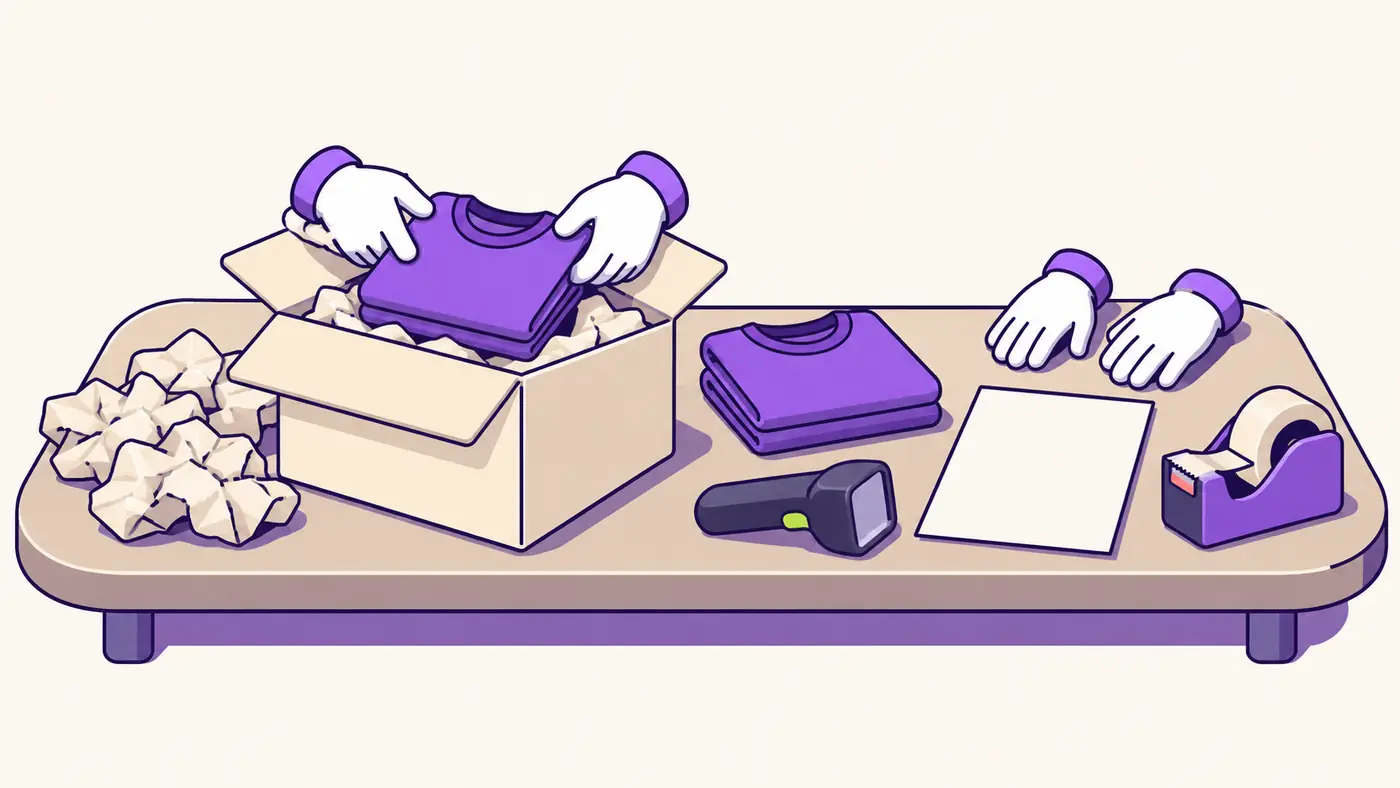
Watch both stations. The picker checks SKU, variant, and quantity. The packer checks the contents against the current instruction, applies the packaging recipe, and matches the parcel to its label. A trainer checks the result before anything is sealed or staged.
Record the missed step rather than writing “needs more training.” For example, note that the trainee checked the style but missed the size. Demonstrate that check again, then repeat it with another order.
When the sequence is reliable, introduce a normal batch and observe pace. Keep a lead available for questions.
How should changed orders and cancellations reach the floor?
Teach staff one approved source of current instructions and one route for stopping work already in progress.
For future orders, Revize can hold fulfillment during a timed editing window when Hold orders is selected, but your warehouse must respect that hold (Revize processing documentation). The store-wide Until fulfillment option does not place a hold by itself. Shopify documents that a fulfillment hold blocks fulfillment until released; test which floor instruction shows release and final contents, then teach that view. Use our fulfillment-hold setup guide for the configuration details.
Shopify says some fulfillment apps might not recognize edits, so rehearse a change and cancellation through your actual connection. If work has started, the coordinator must confirm a physical stop while staff keep the goods together outside active work and wait for reconciled instructions. Use the detailed 3PL already picking guide for live incidents.
The game’s correction bench is a visual prompt for this discussion. Your real process needs a person who owns the correction and authorizes the restart.
Keep the detailed order-change policy with the operations owner, using the 3PL stop, confirm and reconcile guide for the incident procedure.
Which cutoffs and escalation rules should staff know?
Post the edit deadline, pick release, and carrier handoff separately, with an owner for each.
A suggested example might close customer editing at 10:00, release a checked pick batch at 10:15, and stage parcels for a 16:00 carrier collection. These are illustrative times. Set yours from tested system behavior and the carrier arrangement, then write the timezone beside them.
Explain what happens after each cutoff. A late request goes to the coordinator. A seasonal packer does not promise a change or substitute a product without approval.
Use these escalation rules in the rehearsal:
- A SKU, quantity, or stock mismatch goes to the picking lead.
- Damage or uncertain packaging goes to the packing lead.
- A cancellation, address change, or conflicting instruction goes to the support-to-floor coordinator.
- A printer or system failure goes to the shift lead. Stop affected label work until an approved fallback is available.
At shift handover, identify each unresolved tote, its location, its owner, and the decision still needed. Get the incoming lead to acknowledge it.
What belongs on the day-one seasonal warehouse staff checklist?
Sign off each station when the trainee demonstrates the work and knows its stop condition.
Use this checklist for the first supervised shift. Keep the record with the trainee’s station assignments.
| Check | Demonstration before sign-off | Stop or escalate when |
|---|---|---|
| Access and floor induction | Use the assigned device and identify the supervisor and emergency route | Access fails or a task requires separate authorization |
| Order and tote identity | Match the released instruction to the correct tote | Identifier or release instruction is unclear |
| Picking | Match bin, SKU, variant, and quantity | Stock or item differs from the instruction |
| Kits and gifts | Follow the approved component and insert list | A component or instruction is missing |
| Packing | Check contents and use the packaging recipe | Damage or packaging choice is uncertain |
| Label and staging | Match parcel, destination, service, and staging lane | Label or instruction conflicts |
| Changes and cancellations | Park the order and contact the coordinator | A stop notice or revised instruction arrives |
| Handover | Identify unresolved work and its owner | Nobody has accepted responsibility |
If a row fails, keep that task supervised and repeat the demonstration. Add your initials and date only after the observed check passes.
What to do this week
Prepare one complete onboarding route and test it with a lead before seasonal staff arrive.
- Name trainers, the support-to-floor coordinator, and their backups.
- Walk every station and fix missing labels, access, supplies, and exception space.
- Prepare practice orders and rehearse a change and cancellation through the warehouse connection.
- Schedule the first-day demonstration and individual station sign-offs.
- Try Warehouse Rush as the optional ten-minute warm-up. Enter with your email and store URL, then ship your first parcel to open The Nine-Figure Upsell Playbook.
The playbook is a separate 16-page guide, with six missions under “Choose / Build / Prove / Decide.” Its premise is “Practical lessons from our work with nine-figure brands.” It covers choosing a useful pair, building and placing the offer, setting offer priority, proving payment, diagnosing results, and deciding from your own scorecard. Use it with the person responsible for offers when reviewing what those additions ask the warehouse to handle.
Frequently Asked Questions
Check readiness through observed station work, including what the person does when an order needs to stop.
How do I train temp pickers and packers for Black Friday on Shopify?
Demonstrate one station, supervise practice orders, and sign off the checks before assigning independent work. Cover order identity, SKU, variant, quantity, packaging, and the exception route. Use your actual sale products and devices. Give each trainee a named contact for their first shifts.
When should I start seasonal warehouse onboarding before BFCM?
Use the final two to three weeks for station preparation, demonstrations, and supervised rehearsals. This is a suggested operating schedule, not a fixed training requirement. Move it earlier for complex products, equipment authorization, or an early sale. Check readiness person by person.
What should be on a seasonal warehouse staff checklist?
Include access, floor induction, tote identity, pick accuracy, packaging, label checks, escalation, and handover. Add kit and gift steps where relevant. Write an observable pass condition beside each task so a lead can record what the trainee actually demonstrated.
How do I make sure a temp does not pack a cancelled order?
Give cancellation notices a named owner and require confirmation that the physical work has stopped. Rehearse how the notice reaches the floor. Have staff isolate the affected tote and wait for an approved next step. Verify on a test order what your warehouse system displays after cancellation.
Can I use Warehouse Rush to train seasonal warehouse staff?
Use it as an optional illustration of picking, kit assembly, packing, loading, and corrections. Follow the game with supervised practice on your floor. Judge readiness from the person’s checks and escalation decisions on your actual workflow.
How do I check that seasonal staff are ready for the BFCM rush?
Watch each person complete representative orders and correctly stop an exception before approving independent work. Record station sign-offs separately. Keep unresolved tasks supervised, repeat missed checks, and confirm who covers questions during breaks and shift changes.