
On this page
A coffee sample can be a sensible addition to a coffee order. It becomes a different proposition if the sample needs its own parcel, another shipping charge and a separate warehouse instruction.
Start with what belongs beside the original purchase, then follow it all the way to dispatch. Our guide to post-purchase upsell placements covers where offers can run. This guide is about what to offer, how it ships and what would count as a worthwhile result.
Which Shopify post-purchase upsell examples are worth testing?
Test a useful companion that fits the purchased product and can reach the same packing bench before the order leaves.
The five stores and all prices in these examples are illustrative, not Revize customer configurations or results. The percentages compare the add-on price with the original merchandise subtotal, before tax and shipping. They are starting examples, not recommended price ratios.
| Store type | Original order | Offer | Price relative to order | Warehouse question |
|---|---|---|---|---|
| Running apparel | $80 running kit | $16 mesh wash bag | 20% | Can it join the clothing parcel before picking? |
| Beauty and skincare | $60 cleanser and moisturizer | $12 washable headband | 20% | Is it stocked beside the skincare products? |
| Coffee | $40 whole-bean coffee order | $10 sample bag | 25% | Does the extra weight change the parcel cost? |
| Gifts and toys | $48 birthday teddy bear | $6 greeting card | 12.5% | Does packing have an instruction to insert it? |
| Home | $120 duvet cover | $30 matching pillowcase pair | 25% | Are the finish, size, location and carton suitable? |
These are companion purchases, often called cross-sells. A more expensive replacement is another possible upsell, but it also requires removing the original item correctly. Begin with the relationship you can explain and verify.
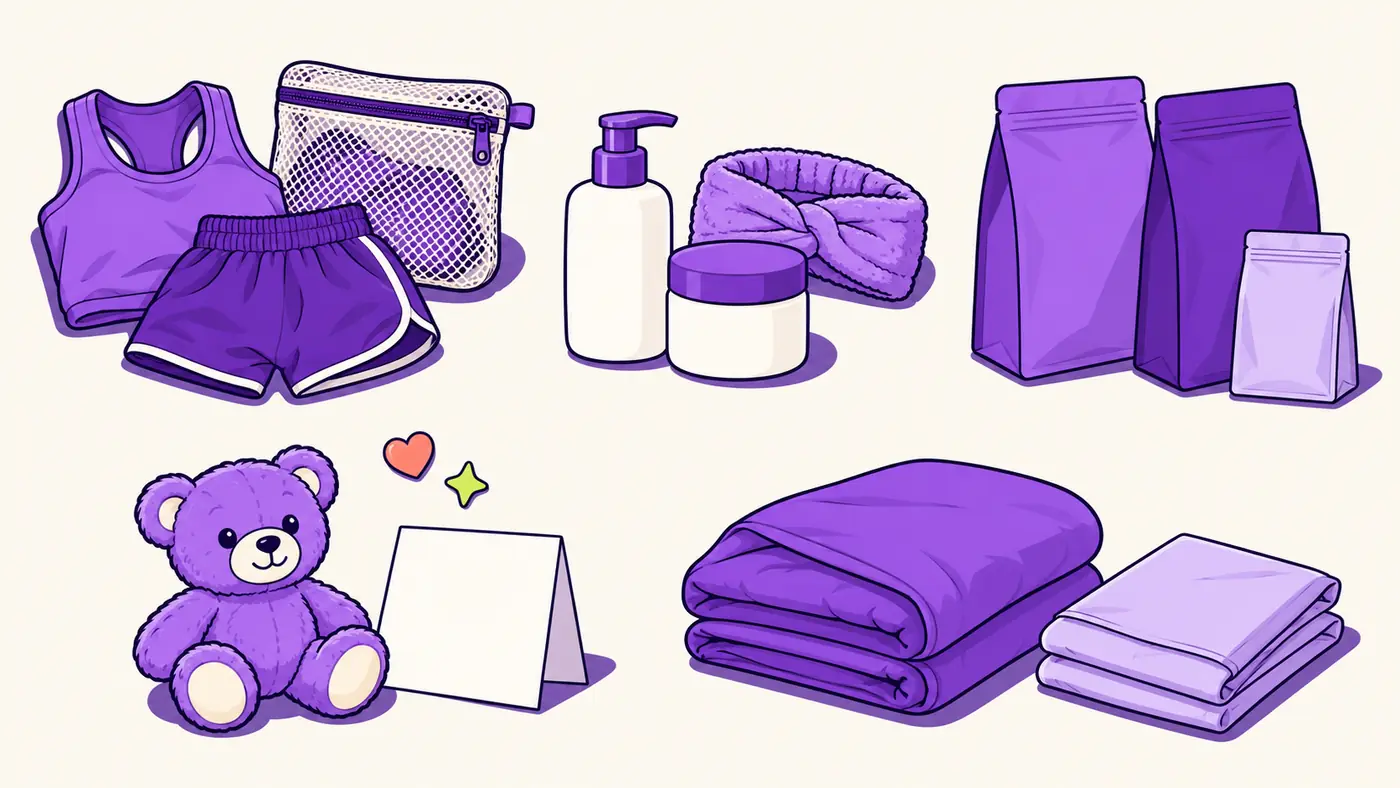
Apparel: add a care item with a clear purpose
A mesh wash bag is a useful first test when it suits the garments and does not require another sizing decision.
For the illustrative running-apparel store, offer the $16 bag after an $80 kit purchase. The reason is specific: the customer has bought garments whose care instructions recommend using a wash bag. Check those instructions before writing the offer. Do not claim the bag extends garment life without evidence.
Check whether the kit already includes a bag. Make the dimensions clear, and verify that every bag variant offered can hold the eligible garments.
The intended warehouse result is one order number and one clothing parcel containing the kit and bag. Verify that the added line reaches the pick instructions before release. If the bag ships from another location, cost that second shipment before including it in this offer.
Measure paid, retained bags and their contribution. Also check whether shoppers remove an original item after accepting the bag. Extra accessory revenue can coexist with a lower-value final order.
Beauty: complete the routine without inventing a skincare claim
A washable headband can complement a cleansing order when it is useful, available and not already included.
In the illustrative beauty store, a $12 headband accompanies a $60 cleanser-and-moisturizer order. Explain the practical use: keeping hair away while washing the face. Avoid promises about skin results or assumptions that another active ingredient suits every customer.
Check the headband’s dimensions, material and existing order contents. A kit that already contains one should not receive the same suggestion accidentally.
For fulfillment, the headband should join the skincare products in the same box, under the original order number. Ask packing to verify that the revised contents still fit the protective packaging. An accessory stocked only at another warehouse needs a separate shipment plan and cost.
Compare retained headband contribution with a no-offer group when you can run a controlled test. Record accessory refunds and any new discount applied to the original products. A higher accepted-offer count alone does not answer whether the store earned more.
Coffee and food: make the next taste practical to ship
A sample bag works when its format suits the original order and its weight does not make the economics worse.
For an illustrative whole-bean coffee store, offer a $10 sample bag alongside a $40 order. The customer can try another roast without buying another full bag. State the sample weight and format clearly.
Use a companion whose displayed options all fit the eligible purchase. Do not promise a matching grind if your configuration cannot reliably select it. For other food categories, check storage requirements, shelf life and the product’s own dietary information before suggesting a pair.
The intended result is the sample on the same order number and in the same coffee parcel. Weigh a packed test order. If the sample comes from another roaster or requires separate dispatch, include that shipment cost or choose another offer.
Review contribution after packaging and shipping. Then follow repeat purchases over your chosen review period. An extra bag bought today may replace a purchase the customer would otherwise have made later.
Gifts and toys: add something the packer can execute
A greeting card fits a gift order only when the warehouse can include the correct card before dispatch.
In the illustrative gift store, offer a $6 birthday card after a $48 teddy bear purchase. The connection is the occasion. Show what the customer gets, and check whether the original gift already includes a card.
Start with an unpersonalized card. A handwritten message adds another task, so offer that only after the actual process for collecting and printing or writing the message has been tested.
The card should appear on the original order and enter the same gift box. Check both the pick line and the packing instruction. If another supplier sends the card separately, the offer no longer delivers a complete gift in one parcel.
Measure retained card contribution alongside missing-card complaints and dispatch performance. A small paid addition is not worthwhile if the extra packing task causes the gift to miss its agreed departure.
Home: offer the exact missing piece
Matching pillowcases fit a duvet-cover order when the finish and size are compatible and the parcel can accommodate them.
For the illustrative home store, pair a $120 duvet cover with $30 pillowcases. Confirm that the cover is sold without them. Make the quantity clear so the customer knows whether the offer contains one pillowcase or a pair.
Check every eligible purchase variant against every displayed companion variant. A product match is not proof of a matching finish or size. If the configuration cannot make the promise true for all those combinations, choose another companion or leave the offer off.
The intended result is the same order number and one bedding parcel. Test the larger carton and check stock at the shipping location. Pillowcases at another warehouse can still require a second shipment, even when the commercial order is shared.
Track retained contribution after the carton change, shipping and returns. Review wrong-size and wrong-finish reasons separately before increasing the audience.
How do you get an accepted addition into the original shipment?
Set the editing deadline before warehouse work starts, then prove that payment and revised pick instructions reach the fulfillment system.
Shopify tells merchants to check whether their fulfillment service supports order edits. A saved change in Shopify does not prove the warehouse received it.
With Revize, upsell offers on the thank-you and order status pages are Pro features. Accepted items join the original Shopify order. For an additional balance, the customer uses Pay now and goes to Shopify checkout to pay the difference. See the Revize upsell setup documentation and our customer add-items walkthrough.
For each proposed pair, run this sequence:
- Set a deadline that leaves time for payment, warehouse import and the planned pick. Do not choose a longer window just to expose more offers.
- Verify Hold orders with the warehouse. With Skip hold, configure the warehouse to pick only orders carrying the release tag. Revize’s fulfillment sync guide explains both approaches. A tag alone does not stop picking.
- Complete an addition and its payment. Compare the original order number, final SKU, quantity and amount due with the warehouse record.
- Abandon payment on another controlled order. Revize holds unpaid additions until payment is captured, except for cash-on-delivery orders. Verify the resulting state in your store.
- Let a paid order reach packing. Confirm the actual box contents, parcel cost and departure time.
The store-wide Until fulfillment window does not place a hold by itself. Verify the chosen processing mode. If picking has already begun, follow the stop, confirm and reconcile procedure before promising an addition.
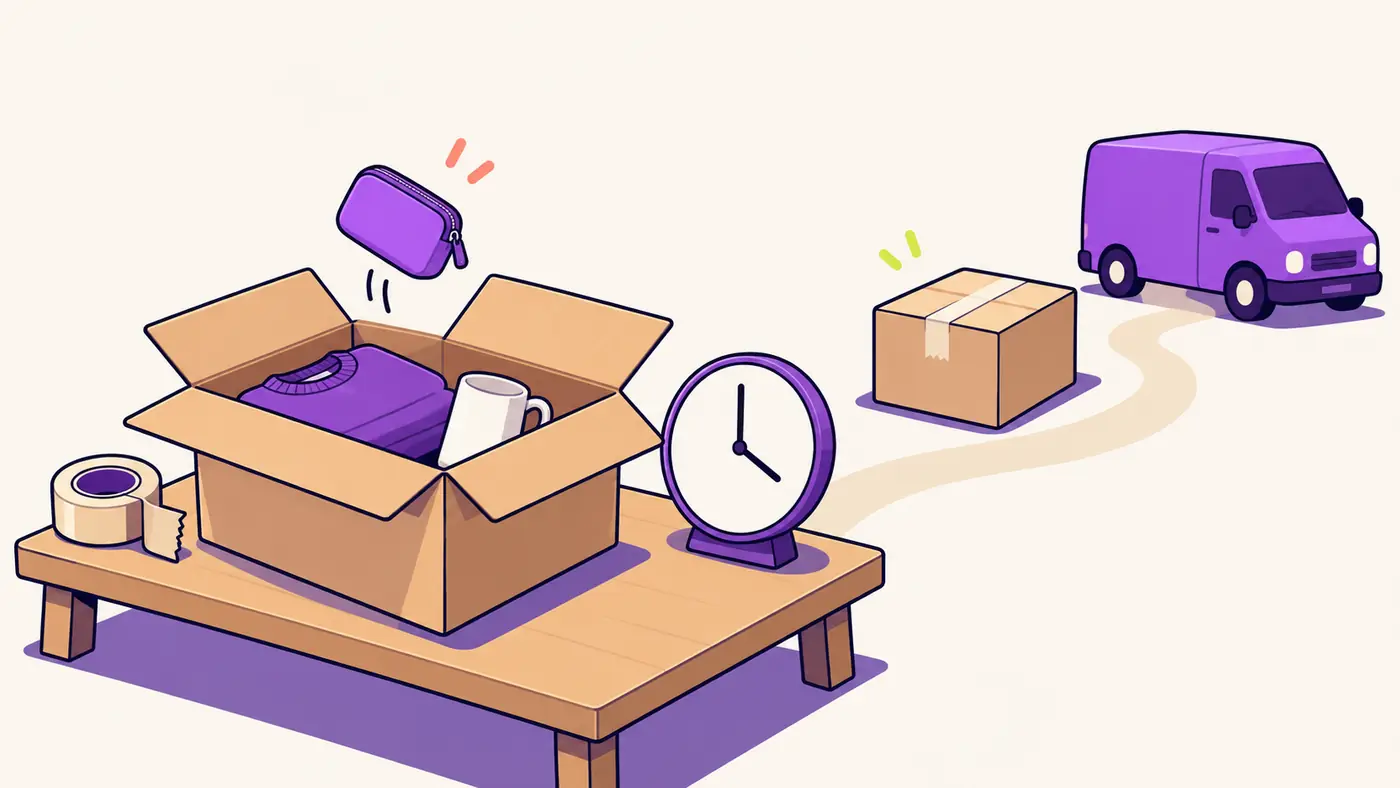
How do you measure whether the upsell was incremental?
Calculate retained contribution first, then compare eligible orders with and without the offer to test incrementality.
Track unique orders shown, accepted additions, confirmed paid additions and additions retained at review. Reconcile removals and refunds, and count revisiting orders once.
Revize applies revize:upsell_offer when an offer is accepted. That tag is not proof of payment. Its upsell revenue reporting counts captured sales and excludes accepted-but-unpaid offers, as the upsell documentation explains. Your own cost calculation still needs product, packing, shipping, fees and refund data.
For the wash bag, the illustrative arithmetic might be $16 after discounts, minus $5 product cost, $1.50 extra fulfillment, $0.50 fees and $1 refund allowance. That leaves $8 contribution per retained addition. Those are example costs, not a benchmark. Reconcile actual refunds without charging the same loss twice through both refunds and an allowance.
Positive contribution on the addition does not prove the offer caused extra profit. Where your testing setup allows it, randomly assign eligible orders to offer and no-offer groups during the same period and compare contribution per eligible order over a consistent follow-up period. Include original-item changes, returns, extra shipments and relevant repeat purchases; keep the result provisional until the sample supports a decision.
Without that comparison, describe the result as observed added contribution. A before-and-after AOV increase alone does not establish incremental profit.
Use the Shopify post-purchase upsell playbook for the full launch procedure and scorecard.
What does Warehouse Rush show about changed orders?
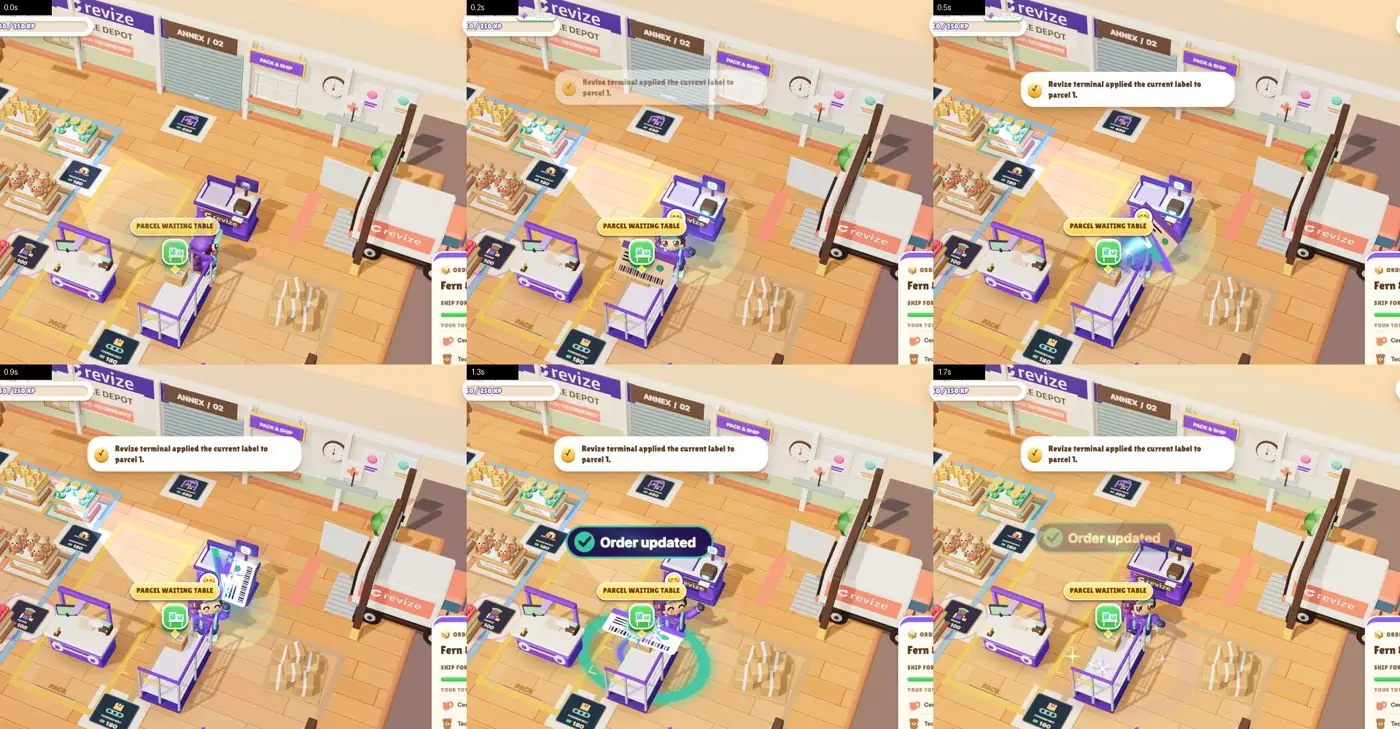
Warehouse Rush makes the correction before dispatch visible: a revised order must be corrected before it can ship.
In Warehouse Rush, orders arrive, you collect goods, pack cartons and move them to dispatch. Changed orders go to the Revize correction bench. The game preserves unaffected goods, and the parcel needs the current revision before dispatch. Your live warehouse test needs to prove its own version of that handoff.
The Nine-Figure Upsell Playbook contains 16 pages and six missions, presented as practical lessons from our work with nine-figure brands. Mission 1 asks you to define success, choose a recipe and choose your pair. Its examples include completing a setup or collection, care items, refills and intentional spares. It asks you to check compatibility, included components, stock and existing order contents before choosing an incentive.
Play Warehouse Rush and get The Nine-Figure Upsell Playbook. Enter your email and store URL to enter the game, then ship your first parcel to access the guide. The game is free, runs in your browser and is available in English.
What to do this week
Take one compatible pair through a paid test order, a warehouse check and a written measurement plan.
- Pick one original product and one companion. Write the reason they belong together.
- Check variants, included items, stock location and packed parcel size.
- Agree the editing deadline and release process with operations.
- Test completed payment, abandoned payment and the final packing instructions.
- Set the review period, cost calculation and minimum worthwhile contribution before launch. Arrange a no-offer comparison if your testing setup supports one.
Frequently Asked Questions
Choose offers by product fit, shipment feasibility and retained contribution, then verify the customer journey in your own store.
What are good Shopify post-purchase upsell examples for my store?
Start with a companion that helps the customer use or complete the purchase. A suitable care item, matching piece, refill or gift accessory gives you a specific reason to make the offer. Check what is already included.
How much should a post-purchase upsell cost compared with the order?
Set the price from customer value and your actual costs, rather than a universal percentage. The ratios in this article are illustrative. Test whether the paid, retained addition covers its product cost and extra fulfillment work.
Will an upsell ship in the same box as the original order?
Only promise one box after confirming the stock location, packing requirements and warehouse cutoff. Revize’s Pro upsells add to the original order. Verify on a test order that the warehouse receives the new line and packs it with the original items.
Can I add an upsell after my 3PL has started picking?
Get warehouse confirmation that the pick can stop and accept revised instructions before promising the addition. An open order page does not establish the parcel’s physical stage. Coordinate the change and reconcile the final contents before release.
Does an accepted offer mean the extra item has been paid for?
Acceptance and confirmed additional payment are separate checks. With Revize Pro, follow the Pay now journey and inspect the final order balance. Verify on a test order what the payment step requires for each payment method you support.
How do I know whether my upsell made extra profit?
Compare contribution per eligible order in randomized offer and no-offer groups. Include refunds, original-order changes, shipping and fees over a consistent period. Without that comparison, report observed added contribution and avoid claiming proven incremental lift.