
Customer Ordered the Wrong Item or Size on Shopify? How to Fix It (2026)
Customer Ordered the Wrong Item or Size on Shopify? How to Fix It (2026)
Customer Ordered the Wrong Item or Size on Shopify? How to Fix It (2026)

Quick answer: If a customer ordered the wrong item or size on Shopify, swap the variant on the order in Admin before fulfillment, then collect or refund the price difference. Speed matters: the median post-checkout edit lands just 4.6 minutes after the order is placed (Revize, 2026), so the fix is easiest before the warehouse starts picking.
Customer Ordered the Wrong Item or Size on Shopify? How to Fix It (2026)
It is 8:47 p.m. and a customer emails: "I ordered a medium, I need a large." The order went through 20 minutes ago. Your warehouse batch starts at 9:00. You have 13 minutes to change the variant, adjust the price difference, and make sure the corrected item is what actually gets picked, not the medium that is already on the pick list.
This is one of the most common post-purchase problems on Shopify, and it is very fixable, but only inside a narrow window. The right move depends entirely on where the order is in fulfillment, not on whether Shopify still shows it as "Unfulfilled." This guide walks through the native fix, the developer path, and the self-serve setup that lets the customer make the change themselves before it ever reaches your support inbox.

Can You Change an Item on a Shopify Order After Checkout?
Yes, you can change the item or variant on a Shopify order after checkout, as long as the order has not been fulfilled. Shopify's order editor lets you remove the wrong variant, add the correct one, and reconcile the price difference. Once fulfillment begins, the item is locked, and the fix moves from "edit the order" to "intercept the shipment," which is slower and more expensive.
The reason speed wins is in the data. 80.6% of order edits happen within the first hour of checkout (Revize, 2026), because that is when customers actually notice the mistake and when the package has not moved. The store that resolves the change in that first hour avoids a return, a reship, and a support thread.
Your response depends on the order's real state:
Order state | Correct action | Main risk |
|---|---|---|
Unfulfilled, no label | Edit the order: remove the wrong variant, add the correct one | Warehouse automation exports the old item during the edit |
Label created, not shipped | Void the label, edit the variant, buy a new label | Reprinting the old label ships the wrong item |
Sent to a 3PL | Pause the fulfillment request, update both systems, confirm acceptance | The 3PL already picked the original variant |
In transit | Request an intercept, or handle it as an exchange on arrival | Carrier fees and failed interception |
Delivered | Process an exchange or return under your policy | Return shipping cost, restocking, fraud |
Treat "label created" as fulfillment in motion, even before the parcel is scanned. If your operation processes hundreds of orders an hour, a five-minute delay can push the wrong variant onto a pick list or packing slip.
How to Change the Wrong Variant in Shopify Admin
Edit the order in Shopify Admin: remove the incorrect variant, add the correct one, and Shopify calculates the balance to collect or refund. Here is the native sequence for an unfulfilled order.
Hold fulfillment first. If you use automated fulfillment or a 3PL, place the order on hold before editing, so the original variant is not exported mid-change.
Open the order in Admin and choose Edit.
Remove the wrong item. Reduce its quantity to zero or remove the line.
Add the correct variant. Search the product, pick the right size or option, and add it.
Reconcile the difference. If the new variant costs more, Shopify creates a balance for the customer to pay. If it costs less, you issue the difference as a refund.
Update inventory and re-release the order to fulfillment once the corrected line is confirmed.
Shopify's order-editing documentation notes real limits worth knowing: fulfilled items cannot be removed, shipping may not automatically recalculate, and some fulfillment services do not recognize edits. Those limits are exactly why the fulfillment hold in step one matters.
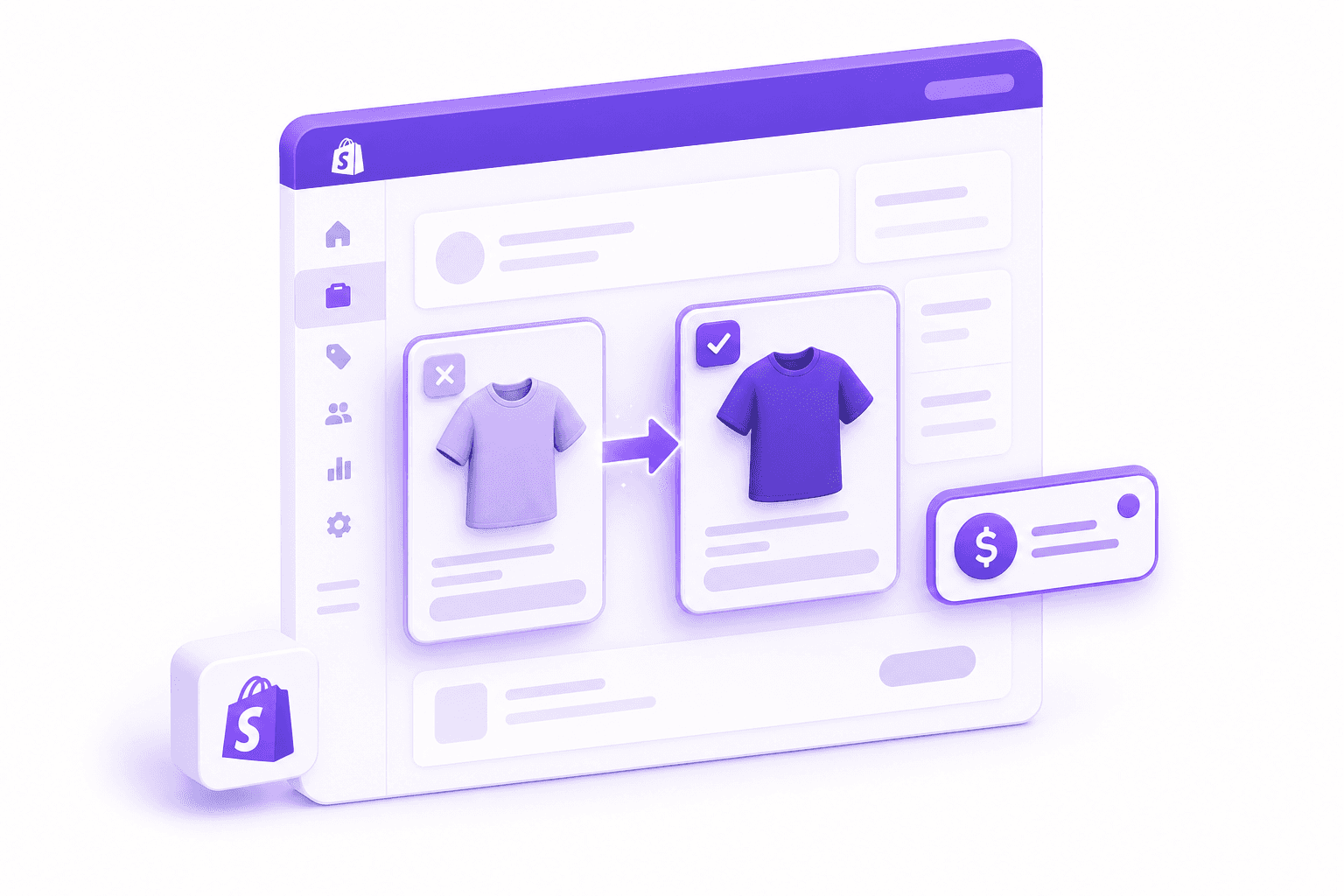
For Developers: Swapping Variants With the Admin API
Developers can automate variant swaps with the orderEditBegin, orderEditSetQuantity/orderEditAddVariant, and orderEditCommit mutations, wrapped in a fulfillment hold. This is the reliable pattern when you want the change to survive automated fulfillment and reach the warehouse cleanly.
The safe sequence:
Call
fulfillmentOrderHoldon the order's fulfillment order so nothing exports mid-edit.Call
orderEditBeginto open a calculated order.Use
orderEditSetQuantityto zero the wrong line item, andorderEditAddVariantto add the correct variant.Review
calculatedOrderfor the price delta, thenorderEditCommitto apply it.Collect any balance due, then
fulfillmentOrderReleaseHoldso the corrected order flows to fulfillment.Subscribe to the
orders/editedwebhook so your WMS, ERP, or 3PL connector re-syncs the corrected line instead of the original.
The webhook step is the one teams skip and regret. Editing the order in Shopify does not automatically pull the old variant off a warehouse pick list, so your integration has to propagate the change. That is the difference between a corrected order on screen and a corrected box on the truck.
Let Customers Fix the Wrong Item Themselves
The fastest fix is the one your team never has to touch: let the customer swap the variant themselves, in a self-serve window you control. This is exactly what Revize is built for. From a branded portal on the order-status and account pages, the shopper changes the size or variant, adds or swaps a product, and pays or receives the price difference automatically, all before the order is released to fulfillment.
The impact is structural, not incremental. 92.2% of post-purchase edits are completed by the customer with no agent involved (Revize, 2026), which means the 8:47 p.m. "I need a large" email never becomes a ticket. The customer fixes it in the moment they notice, inside the first-hour window where 80.6% of edits happen, and your support queue stays flat.
Revize keeps the store in control the whole time. You set which products and variants are swappable, how long the edit window stays open, and when it closes relative to fulfillment, so a swap can never land after picking begins. It handles the balance collection or refund, and it holds fulfillment during the change so the corrected variant is what ships. Brands including Square Enix, Venchi, Nude Project, AYBL, and TheGameCollection run Revize across high-volume and technically complex catalogs, which is the evidence a self-serve model holds up at scale.
Revize deliberately built the hardest layer first, the customer self-serve flow that removes the ticket entirely, and staff-side editing is now on the roadmap on that same engine, so an agent-assisted swap will sit on top of the self-serve foundation you install today.
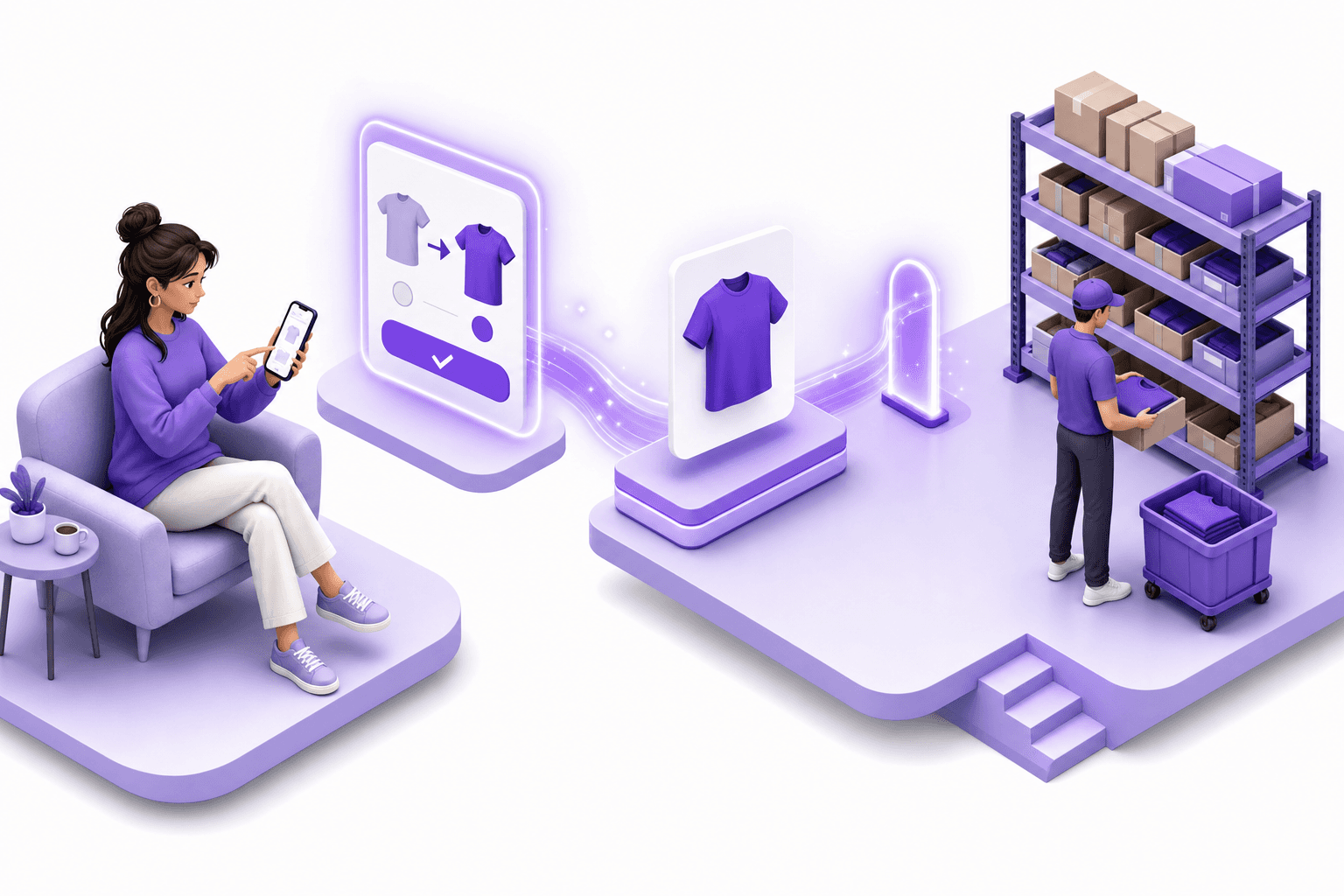
Revize is available on the Shopify App Store, with a free plan to test self-serve variant swaps on real orders.
Make Sure the Corrected Item Reaches the Warehouse
A swapped variant only helps if the correction reaches the warehouse before picking starts, not merely if Shopify shows the right item. Because 80.6% of order edits happen within the first hour (Revize, 2026), a short fulfillment hold plus a reliable update path matter more than any feature list.
Quick definitions for every reader: a 3PL (third-party logistics provider) stores and ships your stock; a WMS (warehouse management system) runs the picking; an OMS (order management system) coordinates orders across channels. Think of Shopify as the front desk and the WMS as the kitchen. Correcting the ticket at the front desk does nothing if the kitchen already plated the original order.
Prove these cases with whatever tool you choose:
Edit before import: swap a variant while the order is held, and confirm the WMS receives the corrected line.
Edit after import: swap after the first warehouse pull, and verify the connector updates, cancels, or recreates the pick task.
Change the total: swap to a cheaper variant, and confirm the refund, inventory, and warehouse removal all agree.
Miss the deadline: attempt a swap after fulfillment begins, and confirm the customer sees a clear refusal, not a false success.
How to Prevent Wrong-Item Orders From Becoming Tickets
Set a self-serve edit window and clear variant options at checkout, so most wrong-item mistakes get corrected by the customer before fulfillment. Prevention is cheaper than any intercept.
Open a self-serve edit window. Give customers a short, merchant-controlled period to change size or variant right after checkout, closing before picking begins.
Make variants unambiguous. Clear size guides and option labels reduce the wrong-size order in the first place.
Confirm the details in the order email. A confirmation that clearly shows size and variant prompts the customer to catch a mistake in that first hour.
Close the window before fulfillment, automatically. A good policy never lets an edit land after the warehouse has started.
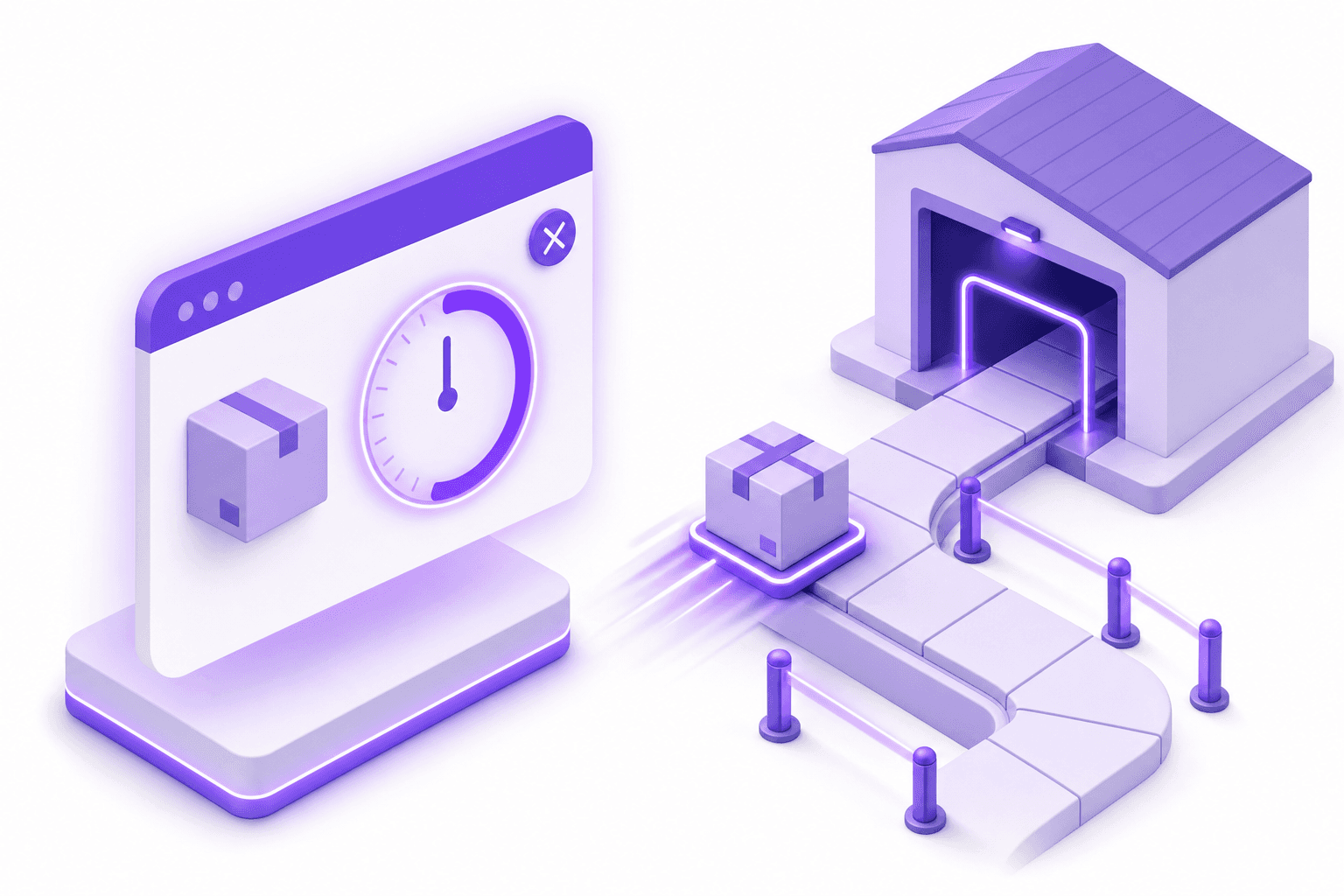
Warning: Never release an order to a 3PL and assume you can pull it back. Confirm how your warehouse handles updates, swaps, and holds before enabling customer edits storewide.
For the full mechanics, read the guide to letting customers edit their own Shopify orders, and for the broader workflow see how to edit an order on Shopify.
Frequently Asked Questions
These answers reflect Shopify documentation and standard fulfillment behavior as of July 2026. Re-verify settings against your own stack before rollout.
Can I change the size or variant on a Shopify order after it is placed?
Yes, as long as the order is unfulfilled. Open the order in Shopify Admin, choose Edit, remove the wrong variant, add the correct one, and Shopify calculates the balance to collect or refund. Once the item is fulfilled it cannot be removed, so the change has to happen before picking begins. Holding fulfillment first keeps automated systems from shipping the original variant mid-edit.
What happens to the price difference when I swap a variant?
Shopify calculates the difference automatically: the customer pays a balance for a more expensive variant, or you refund the difference for a cheaper one. Accelerated wallet payments can be restricted during post-edit collection, so test the swap with the payment methods your customers actually use, including wallets and installments, before enabling it storewide.
Can customers change the wrong item themselves without contacting support?
Yes, with a self-serve editing tool like Revize. The customer opens a branded portal, swaps the size or variant, and pays or receives the difference, inside a window you control and before fulfillment. Because 92.2% of post-purchase edits are completed by the customer with no agent involved (Revize, 2026), the mistake is resolved without a ticket.
The order already has a shipping label. Can I still swap the item?
Yes, if it has not shipped: void the label, edit the variant, then buy a new label. Reprinting the original label would ship the wrong item, so voiding first is essential. If the parcel is already with the carrier, you shift to a shipment intercept or handle it as an exchange when it arrives.
What if the order was already sent to my 3PL?
Pause or cancel the fulfillment request with the 3PL, update the variant in both Shopify and the 3PL system, then confirm acceptance before re-releasing. The risk is that the 3PL already picked the original item, so confirm the corrected line was received rather than assuming the Shopify edit propagated on its own.
How is swapping a variant different from an exchange?
A variant swap happens before fulfillment and changes the order itself; an exchange happens after delivery and replaces an item the customer already received. Swapping before the item ships is faster and cheaper because it avoids return shipping and restocking. Handle wrong-item catches early as swaps, and reserve exchanges for orders that have already arrived.
Can I swap a variant on a partially fulfilled order?
You can edit the unfulfilled portion, but not the items that already shipped. For a partially fulfilled order, correct the remaining unfulfilled line, and treat the shipped item as an exchange or return. Attempting to change a fulfilled line will be blocked by Shopify.
Will editing the order confuse my warehouse or fulfillment app?
It can, if the edit is not propagated, which is why a fulfillment hold plus an orders/edited webhook matter. Shopify warns that some fulfillment services do not recognize edits, so a removed variant can remain on a warehouse copy and an added one may never reach the pick list. Hold fulfillment during the edit and make sure your integration re-syncs the corrected order.
How long should the customer self-serve edit window be?
Long enough to catch the mistake, short enough to close before picking, often 15 to 30 minutes for variant swaps. The median post-checkout edit lands 4.6 minutes after checkout (Revize, 2026), so a 30-minute window captures the large majority while still closing well before most fulfillment batches begin.
Does letting customers swap items increase returns or fraud?
Handled with rules, it reduces both. A swap before fulfillment replaces a return with a corrected shipment, which lowers return volume, and a merchant-controlled window with clear limits prevents abuse. The alternative, forcing every wrong-item catch through a post-delivery return, is the more expensive and fraud-prone path.
Related Articles
These guides cover the rest of the post-purchase editing workflow, from native mechanics to self-service setup in 2026.
Use them to validate your wrong-item workflow against your real customer, payment, and fulfillment setup before rolling it out.
Updated August 2026. Revize is a Shopify app for customer self-serve post-purchase order editing, letting shoppers change the shipping address, swap a variant or product, cancel, and get a refund or store credit before fulfillment, without a support ticket. Learn more about letting customers edit their own Shopify orders, or find Revize on the Shopify App Store.
Quick answer: If a customer ordered the wrong item or size on Shopify, swap the variant on the order in Admin before fulfillment, then collect or refund the price difference. Speed matters: the median post-checkout edit lands just 4.6 minutes after the order is placed (Revize, 2026), so the fix is easiest before the warehouse starts picking.
Customer Ordered the Wrong Item or Size on Shopify? How to Fix It (2026)
It is 8:47 p.m. and a customer emails: "I ordered a medium, I need a large." The order went through 20 minutes ago. Your warehouse batch starts at 9:00. You have 13 minutes to change the variant, adjust the price difference, and make sure the corrected item is what actually gets picked, not the medium that is already on the pick list.
This is one of the most common post-purchase problems on Shopify, and it is very fixable, but only inside a narrow window. The right move depends entirely on where the order is in fulfillment, not on whether Shopify still shows it as "Unfulfilled." This guide walks through the native fix, the developer path, and the self-serve setup that lets the customer make the change themselves before it ever reaches your support inbox.
Can You Change an Item on a Shopify Order After Checkout?
Yes, you can change the item or variant on a Shopify order after checkout, as long as the order has not been fulfilled. Shopify's order editor lets you remove the wrong variant, add the correct one, and reconcile the price difference. Once fulfillment begins, the item is locked, and the fix moves from "edit the order" to "intercept the shipment," which is slower and more expensive.
The reason speed wins is in the data. 80.6% of order edits happen within the first hour of checkout (Revize, 2026), because that is when customers actually notice the mistake and when the package has not moved. The store that resolves the change in that first hour avoids a return, a reship, and a support thread.
Your response depends on the order's real state:
Order state | Correct action | Main risk |
|---|---|---|
Unfulfilled, no label | Edit the order: remove the wrong variant, add the correct one | Warehouse automation exports the old item during the edit |
Label created, not shipped | Void the label, edit the variant, buy a new label | Reprinting the old label ships the wrong item |
Sent to a 3PL | Pause the fulfillment request, update both systems, confirm acceptance | The 3PL already picked the original variant |
In transit | Request an intercept, or handle it as an exchange on arrival | Carrier fees and failed interception |
Delivered | Process an exchange or return under your policy | Return shipping cost, restocking, fraud |
Treat "label created" as fulfillment in motion, even before the parcel is scanned. If your operation processes hundreds of orders an hour, a five-minute delay can push the wrong variant onto a pick list or packing slip.
How to Change the Wrong Variant in Shopify Admin
Edit the order in Shopify Admin: remove the incorrect variant, add the correct one, and Shopify calculates the balance to collect or refund. Here is the native sequence for an unfulfilled order.
Hold fulfillment first. If you use automated fulfillment or a 3PL, place the order on hold before editing, so the original variant is not exported mid-change.
Open the order in Admin and choose Edit.
Remove the wrong item. Reduce its quantity to zero or remove the line.
Add the correct variant. Search the product, pick the right size or option, and add it.
Reconcile the difference. If the new variant costs more, Shopify creates a balance for the customer to pay. If it costs less, you issue the difference as a refund.
Update inventory and re-release the order to fulfillment once the corrected line is confirmed.
Shopify's order-editing documentation notes real limits worth knowing: fulfilled items cannot be removed, shipping may not automatically recalculate, and some fulfillment services do not recognize edits. Those limits are exactly why the fulfillment hold in step one matters.
For Developers: Swapping Variants With the Admin API
Developers can automate variant swaps with the orderEditBegin, orderEditSetQuantity/orderEditAddVariant, and orderEditCommit mutations, wrapped in a fulfillment hold. This is the reliable pattern when you want the change to survive automated fulfillment and reach the warehouse cleanly.
The safe sequence:
Call
fulfillmentOrderHoldon the order's fulfillment order so nothing exports mid-edit.Call
orderEditBeginto open a calculated order.Use
orderEditSetQuantityto zero the wrong line item, andorderEditAddVariantto add the correct variant.Review
calculatedOrderfor the price delta, thenorderEditCommitto apply it.Collect any balance due, then
fulfillmentOrderReleaseHoldso the corrected order flows to fulfillment.Subscribe to the
orders/editedwebhook so your WMS, ERP, or 3PL connector re-syncs the corrected line instead of the original.
The webhook step is the one teams skip and regret. Editing the order in Shopify does not automatically pull the old variant off a warehouse pick list, so your integration has to propagate the change. That is the difference between a corrected order on screen and a corrected box on the truck.
Let Customers Fix the Wrong Item Themselves
The fastest fix is the one your team never has to touch: let the customer swap the variant themselves, in a self-serve window you control. This is exactly what Revize is built for. From a branded portal on the order-status and account pages, the shopper changes the size or variant, adds or swaps a product, and pays or receives the price difference automatically, all before the order is released to fulfillment.
The impact is structural, not incremental. 92.2% of post-purchase edits are completed by the customer with no agent involved (Revize, 2026), which means the 8:47 p.m. "I need a large" email never becomes a ticket. The customer fixes it in the moment they notice, inside the first-hour window where 80.6% of edits happen, and your support queue stays flat.
Revize keeps the store in control the whole time. You set which products and variants are swappable, how long the edit window stays open, and when it closes relative to fulfillment, so a swap can never land after picking begins. It handles the balance collection or refund, and it holds fulfillment during the change so the corrected variant is what ships. Brands including Square Enix, Venchi, Nude Project, AYBL, and TheGameCollection run Revize across high-volume and technically complex catalogs, which is the evidence a self-serve model holds up at scale.
Revize deliberately built the hardest layer first, the customer self-serve flow that removes the ticket entirely, and staff-side editing is now on the roadmap on that same engine, so an agent-assisted swap will sit on top of the self-serve foundation you install today.
Revize is available on the Shopify App Store, with a free plan to test self-serve variant swaps on real orders.
Make Sure the Corrected Item Reaches the Warehouse
A swapped variant only helps if the correction reaches the warehouse before picking starts, not merely if Shopify shows the right item. Because 80.6% of order edits happen within the first hour (Revize, 2026), a short fulfillment hold plus a reliable update path matter more than any feature list.
Quick definitions for every reader: a 3PL (third-party logistics provider) stores and ships your stock; a WMS (warehouse management system) runs the picking; an OMS (order management system) coordinates orders across channels. Think of Shopify as the front desk and the WMS as the kitchen. Correcting the ticket at the front desk does nothing if the kitchen already plated the original order.
Prove these cases with whatever tool you choose:
Edit before import: swap a variant while the order is held, and confirm the WMS receives the corrected line.
Edit after import: swap after the first warehouse pull, and verify the connector updates, cancels, or recreates the pick task.
Change the total: swap to a cheaper variant, and confirm the refund, inventory, and warehouse removal all agree.
Miss the deadline: attempt a swap after fulfillment begins, and confirm the customer sees a clear refusal, not a false success.
How to Prevent Wrong-Item Orders From Becoming Tickets
Set a self-serve edit window and clear variant options at checkout, so most wrong-item mistakes get corrected by the customer before fulfillment. Prevention is cheaper than any intercept.
Open a self-serve edit window. Give customers a short, merchant-controlled period to change size or variant right after checkout, closing before picking begins.
Make variants unambiguous. Clear size guides and option labels reduce the wrong-size order in the first place.
Confirm the details in the order email. A confirmation that clearly shows size and variant prompts the customer to catch a mistake in that first hour.
Close the window before fulfillment, automatically. A good policy never lets an edit land after the warehouse has started.
Warning: Never release an order to a 3PL and assume you can pull it back. Confirm how your warehouse handles updates, swaps, and holds before enabling customer edits storewide.
For the full mechanics, read the guide to letting customers edit their own Shopify orders, and for the broader workflow see how to edit an order on Shopify.
Frequently Asked Questions
These answers reflect Shopify documentation and standard fulfillment behavior as of July 2026. Re-verify settings against your own stack before rollout.
Can I change the size or variant on a Shopify order after it is placed?
Yes, as long as the order is unfulfilled. Open the order in Shopify Admin, choose Edit, remove the wrong variant, add the correct one, and Shopify calculates the balance to collect or refund. Once the item is fulfilled it cannot be removed, so the change has to happen before picking begins. Holding fulfillment first keeps automated systems from shipping the original variant mid-edit.
What happens to the price difference when I swap a variant?
Shopify calculates the difference automatically: the customer pays a balance for a more expensive variant, or you refund the difference for a cheaper one. Accelerated wallet payments can be restricted during post-edit collection, so test the swap with the payment methods your customers actually use, including wallets and installments, before enabling it storewide.
Can customers change the wrong item themselves without contacting support?
Yes, with a self-serve editing tool like Revize. The customer opens a branded portal, swaps the size or variant, and pays or receives the difference, inside a window you control and before fulfillment. Because 92.2% of post-purchase edits are completed by the customer with no agent involved (Revize, 2026), the mistake is resolved without a ticket.
The order already has a shipping label. Can I still swap the item?
Yes, if it has not shipped: void the label, edit the variant, then buy a new label. Reprinting the original label would ship the wrong item, so voiding first is essential. If the parcel is already with the carrier, you shift to a shipment intercept or handle it as an exchange when it arrives.
What if the order was already sent to my 3PL?
Pause or cancel the fulfillment request with the 3PL, update the variant in both Shopify and the 3PL system, then confirm acceptance before re-releasing. The risk is that the 3PL already picked the original item, so confirm the corrected line was received rather than assuming the Shopify edit propagated on its own.
How is swapping a variant different from an exchange?
A variant swap happens before fulfillment and changes the order itself; an exchange happens after delivery and replaces an item the customer already received. Swapping before the item ships is faster and cheaper because it avoids return shipping and restocking. Handle wrong-item catches early as swaps, and reserve exchanges for orders that have already arrived.
Can I swap a variant on a partially fulfilled order?
You can edit the unfulfilled portion, but not the items that already shipped. For a partially fulfilled order, correct the remaining unfulfilled line, and treat the shipped item as an exchange or return. Attempting to change a fulfilled line will be blocked by Shopify.
Will editing the order confuse my warehouse or fulfillment app?
It can, if the edit is not propagated, which is why a fulfillment hold plus an orders/edited webhook matter. Shopify warns that some fulfillment services do not recognize edits, so a removed variant can remain on a warehouse copy and an added one may never reach the pick list. Hold fulfillment during the edit and make sure your integration re-syncs the corrected order.
How long should the customer self-serve edit window be?
Long enough to catch the mistake, short enough to close before picking, often 15 to 30 minutes for variant swaps. The median post-checkout edit lands 4.6 minutes after checkout (Revize, 2026), so a 30-minute window captures the large majority while still closing well before most fulfillment batches begin.
Does letting customers swap items increase returns or fraud?
Handled with rules, it reduces both. A swap before fulfillment replaces a return with a corrected shipment, which lowers return volume, and a merchant-controlled window with clear limits prevents abuse. The alternative, forcing every wrong-item catch through a post-delivery return, is the more expensive and fraud-prone path.
Related Articles
These guides cover the rest of the post-purchase editing workflow, from native mechanics to self-service setup in 2026.
Use them to validate your wrong-item workflow against your real customer, payment, and fulfillment setup before rolling it out.
Updated August 2026. Revize is a Shopify app for customer self-serve post-purchase order editing, letting shoppers change the shipping address, swap a variant or product, cancel, and get a refund or store credit before fulfillment, without a support ticket. Learn more about letting customers edit their own Shopify orders, or find Revize on the Shopify App Store.


Revize your Shopify store. Lead with customer experience.

© Copyright 2026, All Rights Reserved
Revize your Shopify store. Lead with customer experience.
© Copyright 2026, All Rights Reserved
Revize your Shopify store. Lead with customer experience.
© Copyright 2026, All Rights Reserved
Revize your Shopify store. Lead with customer experience.
© Copyright 2026, All Rights Reserved